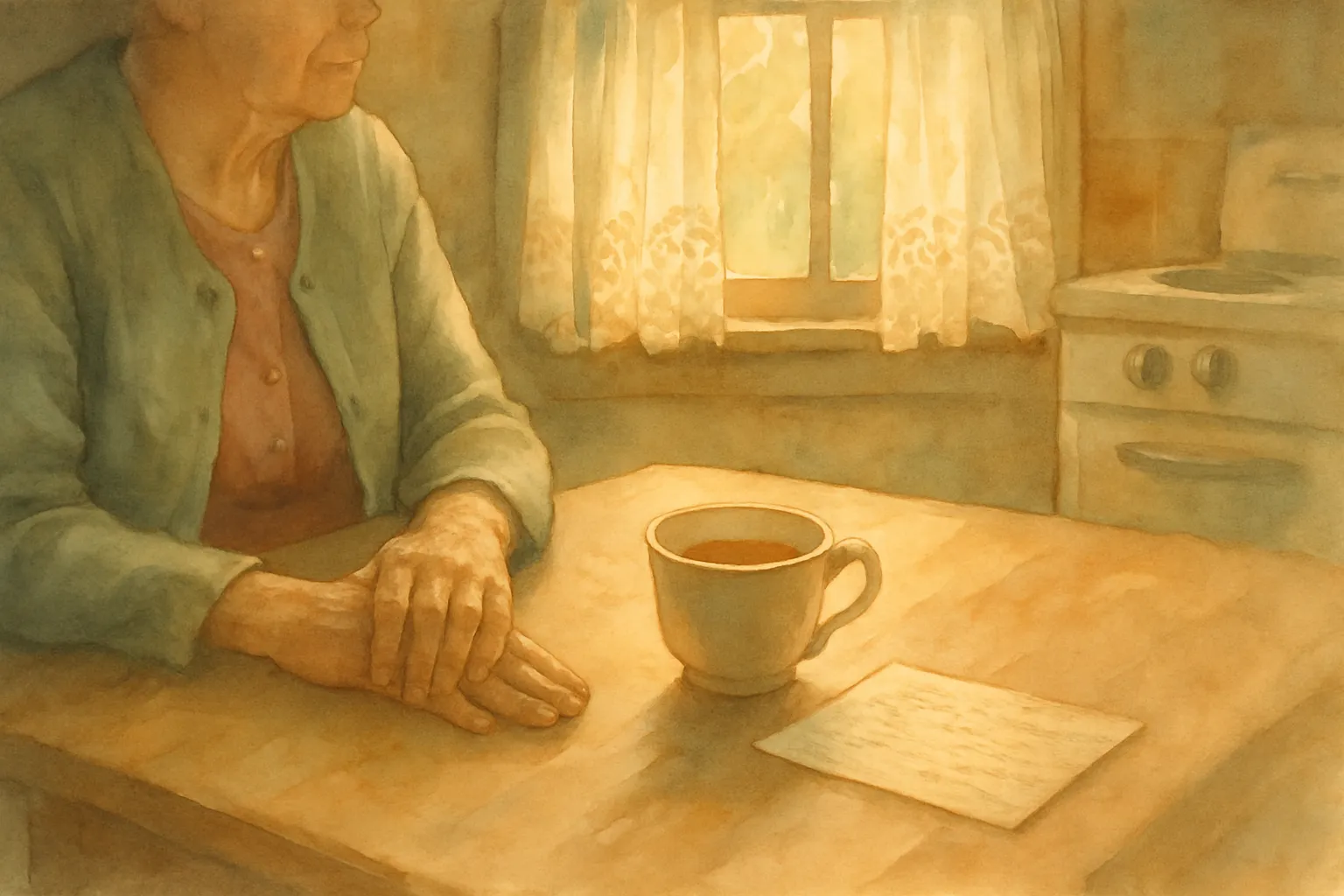
10 Phrases Your Grandmother Said That Were Secretly Brilliant Life Advice
Your grandmother didn't have a self-help shelf. She didn't read books on emotional intelligence or financial planning or relationships. What she had was a small collection of phrases, handed down from her own grandmother, that she pulled out at exactly the right moments.
We rolled our eyes at them when we were young. We're starting to understand them now.
Here are ten of them, and the quiet wisdom hiding inside.
1. "If you don't have something nice to say, don't say anything at all."
It sounds like a rule about manners. It's actually a rule about your own peace of mind.
What your grandmother knew is that most of the things you're tempted to say in anger don't need to be said at all -- and that the few that do can wait until you're calm. Saying nothing in the moment isn't weakness or repression. It's buying yourself the time to figure out whether the thing was worth saying in the first place. Nine times out of ten, it wasn't.
2. "This too shall pass."
Most people remember this one as a comfort during hard times. They forget it also applies to good ones.
The full power of the phrase is that it cuts both ways. The terrible week is temporary, but so is the perfect afternoon on the porch with your grandchildren. Your grandmother said it during crises to give you hope, and she said it during celebrations to keep you grateful and grounded. It's the same truth either direction: nothing lasts, so pay attention now.
3. "Pretty is as pretty does."
For a generation that grew up before social media, this was the rebuttal to every form of vanity, and it still holds.
A beautiful person who is cruel is not beautiful. A plain person who is kind, capable, and steady is. Your grandmother was telling you, in five words, that character is the only quality that compounds over time, while looks do exactly the opposite. The world will eventually price you correctly. Make sure you're worth the price.
4. "Use it up, wear it out, make it do, or do without."
This was the survival motto of the Depression, but it was also, accidentally, the most sophisticated financial advice ever distilled.
Wealth isn't built by earning more. It's built by needing less. Every dollar your grandmother didn't spend was a dollar that quietly compounded into the house, the retirement, the legacy. People who follow this rule by instinct end up rich. People who don't, no matter how much they earn, end up broke. The math has not changed.
5. "You catch more flies with honey than with vinegar."
Every negotiator, salesperson, and diplomat eventually learns this the hard way.
The world responds to warmth. People will do extraordinary things for someone who is kind to them, and almost nothing for someone who is right but rude. Your grandmother wasn't telling you to be a pushover -- she was telling you that being pleasant is a strategy, and one that beats being correct most of the time. The people who get their way in life usually got there by being likable, not by being clever.
6. "Mind your own business."
In an age of group chats, comment sections, and other people's marriages broadcast on social media, this phrase has aged into something close to a spiritual practice.
Your grandmother understood that almost all of human unhappiness comes from being too interested in things that don't belong to you. Other people's choices, other people's relationships, other people's money. The discipline of looking away -- of not weighing in, not investigating, not having an opinion -- is one of the rarest and most peaceful habits a person can develop. She had it. Most of us don't.
7. "Don't borrow trouble."
Worry, your grandmother knew, is a tax you pay on a debt that may never come due.
When you lie awake at three in the morning playing out the conversation that hasn't happened yet, imagining the diagnosis you haven't received, rehearsing the argument you may never have -- you are borrowing trouble. The trouble may not arrive. And if it does, you'll deal with it then, with the energy you would have spent worrying. There's no interest-free loan in life except the one you give to your own anxiety.
8. "Measure twice, cut once."
It was a carpenter's phrase before it was a grandmother's, but she applied it to everything.
Big decisions deserve big patience. Speed is overrated, and reversing a mistake almost always costs more than preventing it would have. Take the extra day before you sign. Read the paperwork again. Sleep on it before you send the email. Your grandmother lived in a world where mistakes were expensive -- and so do you, even if it doesn't feel that way until the bill arrives.
9. "Hard work never killed anybody."
This one used to embarrass us. It sounds old-fashioned now, almost rude.
But what she meant was kinder than it sounds. She meant that the discomfort of effort is survivable -- that you will not actually die from the difficult thing you're avoiding. She watched a whole generation refuse hard things in the hopes of finding easier ones, and she watched them end up unhappier than the ones who just put their heads down and did the work. The shortcut is almost always longer. She'd seen it.
10. "Better to be alone than in bad company."
Of all her phrases, this was the one she said the most carefully, and usually only once, when she thought you were old enough to hear it.
The wrong friends, the wrong partner, the wrong crowd -- these will cost you more than loneliness ever will. Loneliness is painful but recoverable. Bad company rearranges your life in ways you don't notice until years later, when you finally look up and wonder how you got here. Your grandmother had watched it happen to people she loved. She wanted to save you the trip.
We didn't listen, mostly. We thought we knew better, and we had to learn the hard way -- the way every generation does.
The lucky ones figured it out in time to pass the same phrases down to their own grandchildren, who will roll their eyes the same way we did.
The lucky ones figured it out in time to say the same things to their own grandchildren, in the same voice, with the same quiet certainty she had.
Get a new story every Sunday morning.
One email a week. No spam. Unsubscribe anytime.