Recipes Your Mom Made From Almost Nothing -- and Why They Still Taste Better
There was a particular kind of meal that came out of an American kitchen in the middle of the twentieth century. It was made from what was in the pantry, what was on sale, and what was left over from Sunday. It cost almost nothing. It fed five or six people. And it tasted, somehow, better than half of what we eat now.
These recipes weren't fancy. Most of them weren't even written down. Mom learned them from her mother, who'd learned them in the Depression, who'd learned them from a mother who'd learned them on a farm. They were the survival cooking of people who couldn't afford to waste anything -- and that constraint, it turns out, made for better food than abundance ever has.
Here are eight of them, and why they still belong in your kitchen.
1. Beans and cornbread
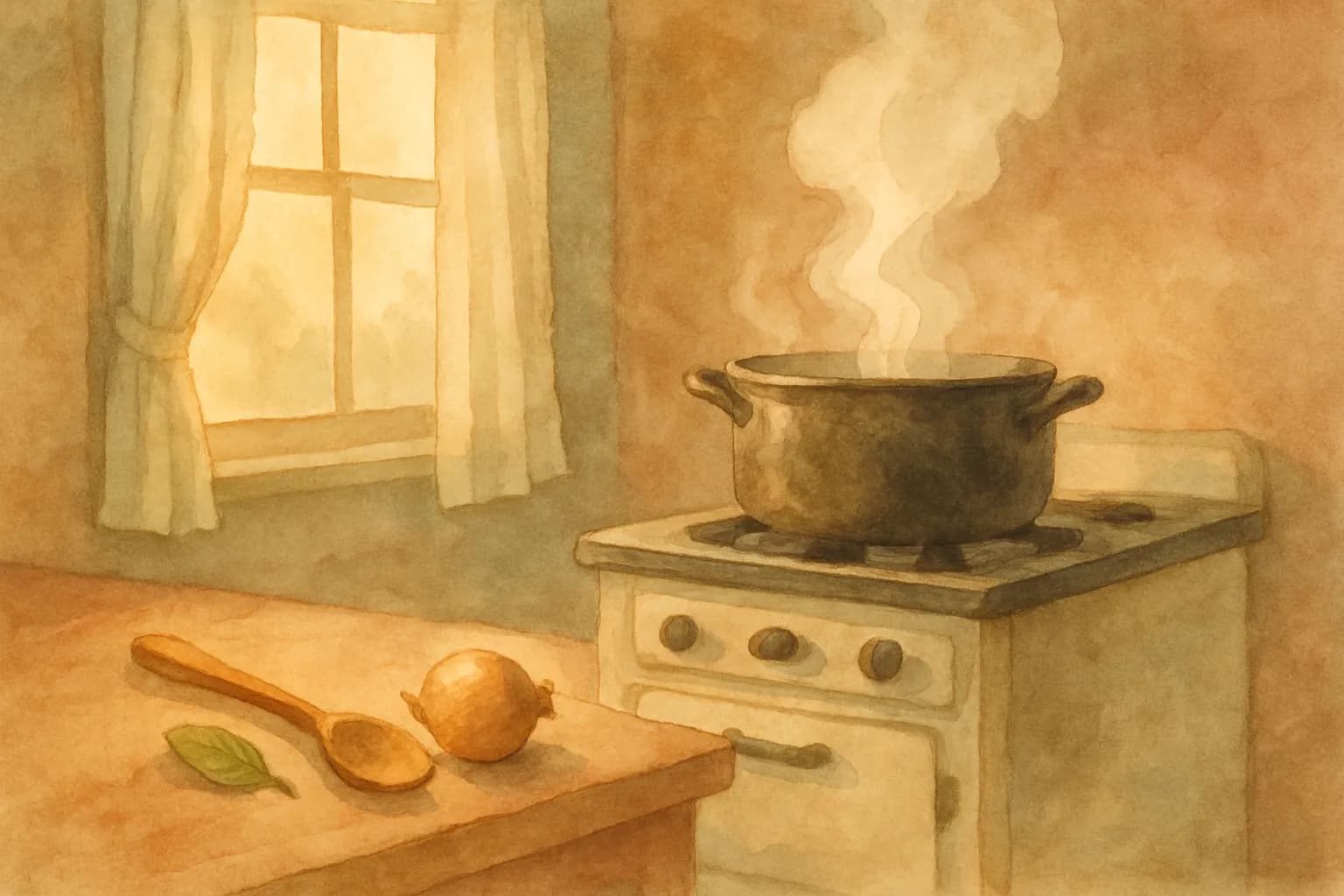
A pound of dried beans, soaked overnight. A piece of fatback or a ham hock. An onion, a clove of garlic, a bay leaf. Salt and pepper. Eight hours on the back of the stove, low and slow, while you did the laundry and the school run.
The cornbread was buttermilk, lard, cornmeal, an egg, a pinch of sugar if you were from north of Tennessee and no sugar if you were from south of it. Baked in a cast-iron skillet that had never been washed with soap.
The cost was under three dollars. The protein was complete. The leftovers got better for three days. Somewhere along the way we decided this was poverty food, and we were wrong. It's one of the best meals on earth, and we were lucky to grow up eating it.
2. Hamburger gravy on toast
A pound of ground beef, browned. Two tablespoons of flour stirred into the fat. Milk poured in slowly, whisked smooth. Salt, pepper, maybe a dash of Worcestershire if Mom was feeling fancy.
Ladled over toast or biscuits or mashed potatoes. Fed a family of five for under two dollars. The military version was called SOS, and a generation of fathers came home from the service still requesting it on cold mornings.
It tastes like coming in from the snow. Nothing in a restaurant has ever tasted that good.
3. Tuna noodle casserole
A can of tuna. A can of cream of mushroom soup. A bag of egg noodles. Half a bag of frozen peas. A handful of crushed potato chips on top. Twenty-five minutes in the oven.
A whole generation of food writers spent years sneering at this casserole. They were wrong, and they're slowly admitting it. It is hot, salty, creamy, and exactly the right thing to eat on a Tuesday in February. The crushed chips on top are a stroke of working-class genius -- the crunch was supposed to come from bread crumbs, but who had bread crumbs on a Tuesday in February?
4. Goulash (the American kind)
Not the Hungarian kind with paprika and beef shanks. The other kind. The one that lived in every American kitchen between 1955 and 1985.
A pound of ground beef. A chopped onion. A can of diced tomatoes. A can of tomato sauce. A box of elbow macaroni, cooked in the same pot. A teaspoon of Italian seasoning out of the green jar. A handful of shredded cheese on top.
It made enough for two dinners and a lunch. It cost about four dollars. Every American mother of a certain era could make it in her sleep, and probably did. The recipe doesn't exist in any cookbook because it didn't need to. Everyone already knew it.
5. Pancakes for dinner
The unwritten rule was: if it had been a long week, dinner was pancakes. Flour, baking powder, salt, sugar, an egg, milk, butter. Maple syrup if you had it, Aunt Jemima if you didn't, sometimes just butter and brown sugar.
This wasn't a treat exactly, and it wasn't a failure either. It was the meal a mother made when she had run out of money or run out of energy or both, and it always landed as a small celebration with the kids. Pancakes for dinner is one of the great improvised meals in American history.
6. Bean soup with a ham bone
You didn't throw away the ham bone after Easter. You wrapped it in foil, you put it in the freezer, and a month later you made bean soup.
Navy beans soaked overnight. The ham bone, with its scraps of meat still clinging on. An onion, a few carrots, a few stalks of celery, water, salt, pepper, a bay leaf. Three hours on the stove. The ham flavored the broth. The beans thickened it. The leftover meat fell off the bone in soft strings and made it dinner.
A meal made from garbage, served in china bowls, that beat anything you'll find on a winter menu in a downtown restaurant.
7. Liver and onions
The one nobody admits to missing. Half a pound of beef liver, dredged in flour, fried in bacon fat with a mountain of slowly caramelized onions on top. Bacon on the side. Mashed potatoes underneath.
We won't pretend the kids liked it. We won't pretend most of us liked it. But it was on the table every couple of weeks because liver was nearly free and packed with iron, and our mothers were not interested in our opinions on the matter. We ate it, and we lived to tell about it, and now -- somehow, in our fifties -- we crave it on cold nights and don't quite know why.
8. Bread pudding
Two days of stale bread. Three eggs. A cup of milk. A half cup of sugar. Cinnamon, vanilla, a handful of raisins if you had them. Forty-five minutes in the oven.
The bread you would have thrown away became dessert for the whole family. Sometimes there was a thin glaze of butter and brown sugar on top, sometimes a splash of whiskey if it was a Sunday. It cost essentially nothing and disappeared faster than anything you bought at the bakery.
That was the whole point of these recipes. You took what would have been wasted and you turned it into the best part of the day.
Why they tasted better
The food was simpler, and the simpler food was better because it was made with attention. A pot of beans on the back of the stove for eight hours has a depth no quick meal can match. A gravy whisked slowly by hand has a texture no jar can fake. A casserole assembled from leftovers carries the memory of the meals it came from.
But it's more than the cooking. These meals tasted better because of when and how they got eaten. At a table. With your family. Hungry from a day of school or work, not snacking all afternoon. With no screens. With a mother who'd been thinking about dinner since lunchtime. With a father who'd come in from outside and washed his hands at the kitchen sink.
The food was the smaller part of the experience. The rest of it, we have mostly thrown away -- and the food has gone with it.
You can get the food back tonight. The rest is harder, but it starts with the food.
Some meals don't need updating. They just need making again.
Get a new story every Sunday morning.
One email a week. No spam. Unsubscribe anytime.
If this brought back a memory, you might also like
How Vinyl Records Quietly Took Over Again -- and Why Gen Z Is Driving the Boom
The industry buried vinyl twice. The kids were never supposed to go back. Then vinyl revenue surpassed $1 billion in 2025, the first time since the 1980s, driven largely by Gen Z buyers.