10 Saturday Morning Cereal Box Toys That Defined a Childhood
The prize was the reason you wanted the cereal.
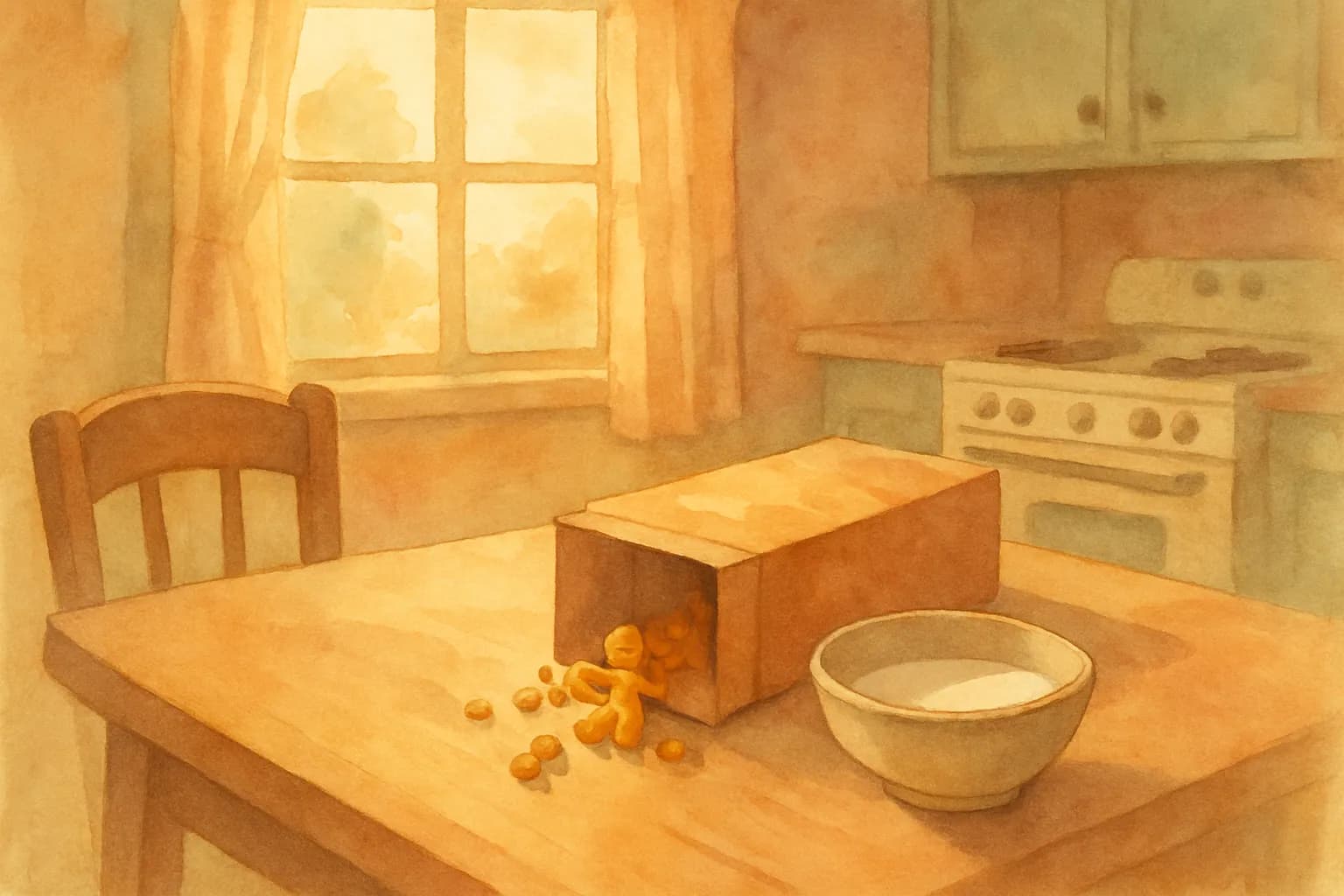
The cereal was fine. The cereal was Sugar Smacks or Trix or Cap'n Crunch or Cocoa Puffs, all roughly interchangeable in flavor and all just a vehicle for the small plastic object buried somewhere inside the box. You poured the cereal into the bowl every morning hoping the prize would come out with it. Sometimes it did. Sometimes you had to dig.
If your mother caught you with your arm in the box up to the elbow, there was trouble. The rule was you waited. The rule was the prize would emerge in due course as the cereal got eaten. The rule was ignored when she wasn't in the kitchen.
Here are ten of the prizes that came out of those boxes, and what each one was actually like.
1. The decoder ring
A plastic ring with a rotating top, marked with numbers around the outside and letters around the inside, sometimes the other way around. You set the dial to a key letter, and you could either encode messages for your friends or decode the message printed on the back of the box.
The decoded message was always a disappointment. It said something like "DRINK MORE MILK" or "BRUSH YOUR TEETH." The promise was espionage. The delivery was nutrition advice. You wore the ring for two weeks anyway, because it was a decoder ring, and a decoder ring meant you were a kid who could decode things.
2. The plastic submarine that ran on baking soda
The small white plastic submarine, about three inches long, with a chamber in the bottom you filled with baking soda. You put it in the bathtub. The baking soda fizzed, the submarine sank, then rose, then sank again as the gas escaped.
This was, in retrospect, an actual functioning toy that demonstrated real principles of buoyancy and gas displacement. It was free, in a box of cereal. The bathtub smelled vaguely of baking soda for the rest of the night. You played with it until the baking soda chamber broke off, which usually took about three baths.
3. The cardboard glasses that almost worked
3-D glasses, with one red lens and one blue lens, made of cardboard, that were supposed to give you a three-dimensional image when you looked at the special picture on the back of the box.
They did not work very well. The image was slightly fuzzy, the colors were not quite right, and the effect was less "three dimensional space" than "headache." You wore them anyway, because they were 3-D glasses, and 3-D glasses were the closest thing to science fiction a child could own in 1976.
4. The prize at the bottom of the Cracker Jack box
Cracker Jack wasn't cereal, but it followed the same rule. A small toy or trinket lived at the bottom of the box of caramel popcorn, and the popcorn existed mostly to be eaten quickly so you could get to the prize.
The prize in the Cracker Jack box, by the 1970s, had degraded considerably from the prizes of earlier decades. By 1985 it was often a paper sticker or a temporary tattoo. You felt cheated, but you weren't cheated enough to stop buying the Cracker Jack.
5. The mail-away prize that required three proof-of-purchase symbols
The real prizes weren't in the box. They were the mail-away prizes, advertised on the back of the box, that required you to cut out three or four proof-of-purchase symbols from the bottom of the box and send them in with a quarter and your address.
The prize was a Star Wars X-wing fighter, or a Spider-Man poster, or a real glow-in-the-dark frisbee. You ate three boxes of cereal in two weeks to accumulate the necessary symbols. Your mother let you, because she could see the educational value of a child working toward a goal.
Then you mailed in the envelope. Then you waited.
6. The waiting
The mail-away prize took six to eight weeks. This is something modern children have no experience of and would not believe.
You checked the mail every day. For six weeks. Your mother said: it'll come, stop asking. You asked anyway. You forgot about it for a while. You remembered again. You checked the mail. The prize did not come.
Then, one Tuesday in October, in a small brown padded envelope addressed to you specifically, the prize arrived. It was always slightly smaller than the picture had suggested. You did not care. You had earned it. The Spider-Man poster went on your wall and stayed there for three years.
7. The Tony the Tiger spoon
A plastic cereal spoon with the head of Tony the Tiger, or Cap'n Crunch, or Toucan Sam, or Snap, Crackle, or Pop molded into the handle.
You used the spoon every morning. The spoon felt like it made the cereal taste better. The spoon was, in a small way, evidence that you were on the cereal company's team. You were a Frosted Flakes kid. The spoon proved it.
The spoons survived. Most American grandmothers still have one in a drawer somewhere, used now for stirring coffee or scooping sugar. Find one and a 1975 kid can identify the character within two seconds.
8. The miniature comic book
A four-page miniature comic, folded out of a larger sheet, featuring the cereal's mascot in a small adventure. The Trix Rabbit trying to get the cereal. Captain Crunch fighting Jean LaFoote, the barefoot pirate. Tony the Tiger coaching a team of kids on the importance of breakfast.
The plot was always nutritional. The cereal saved the day. You read the comic six times anyway, because it was a comic, and you were a kid who read comics, and a free one in your cereal box was a small bonus.
9. The temporary tattoo
A small square of paper that, when pressed wet against your skin, transferred an image of a cartoon character or a cereal mascot onto your arm.
The tattoo lasted about two days, or one bath, whichever came first. Your mother saw the tattoo and shook her head and asked when you were going to wash that off. You said never. You washed it off three days later when it had faded to an unrecognizable smudge.
A whole generation of American children went through a temporary-tattoo phase, in the era before real tattoos became common, and the cereal box was where most of the tattoos came from.
10. The plastic figurine of the cereal mascot
Sometimes the prize was a small plastic figurine of the mascot himself. A two-inch Tony the Tiger. A small Cap'n Crunch with his hat painted blue. A Toucan Sam with the orange beak.
You set the figurine on the windowsill in your bedroom. It joined a small army of similar figurines from previous cereals, plus a few Hot Wheels cars, plus a Star Wars guy missing his arm. The windowsill collection was, in its way, a small archive of the cereals you'd eaten and the brands you'd grown up with.
Some of those figurines are now worth real money on eBay. The Tony the Tiger plastic figurine from 1973 sells for thirty dollars on a good day, more if it still has its original paint. Your mother threw yours away in 1992 when she cleaned out your old bedroom.
The prize is mostly gone now. Cereal boxes no longer contain decoder rings and submarines. The mail-away offer has been replaced by a QR code that takes you to a website to enter your information. The plastic figurines are gone. The temporary tattoos are gone. The cardboard glasses that almost worked are gone.
What remained for a long time was the spoon, which some companies kept selling separately for nostalgia, and the comic, which appeared occasionally as a marketing tie-in. Both are mostly gone now too.
The cereal companies took out the prizes because plastic is expensive, regulation got stricter, and most of the toys were cheap enough that nobody really wanted them anyway. The kids today get cereal that costs roughly the same as 1985 cereal in real dollars, but without the small joy of an unexpected object at the bottom of the box.
The cereal is the same. The mornings are not.
Somewhere in a grandmother's kitchen drawer, a Tony the Tiger spoon is still stirring coffee. The cereal is long gone. The morning it came from is not.
Get a new story every Sunday morning.
One email a week. No spam. Unsubscribe anytime.
If this brought back a memory, you might also like
Postcards: A Vanishing American Ritual
The rack stood by the register, a wire carousel six feet tall. You were on vacation. The postcards were ten for a dollar. You picked out six.