10 Foods Every Grandmother Kept in the Freezer (Just in Case)
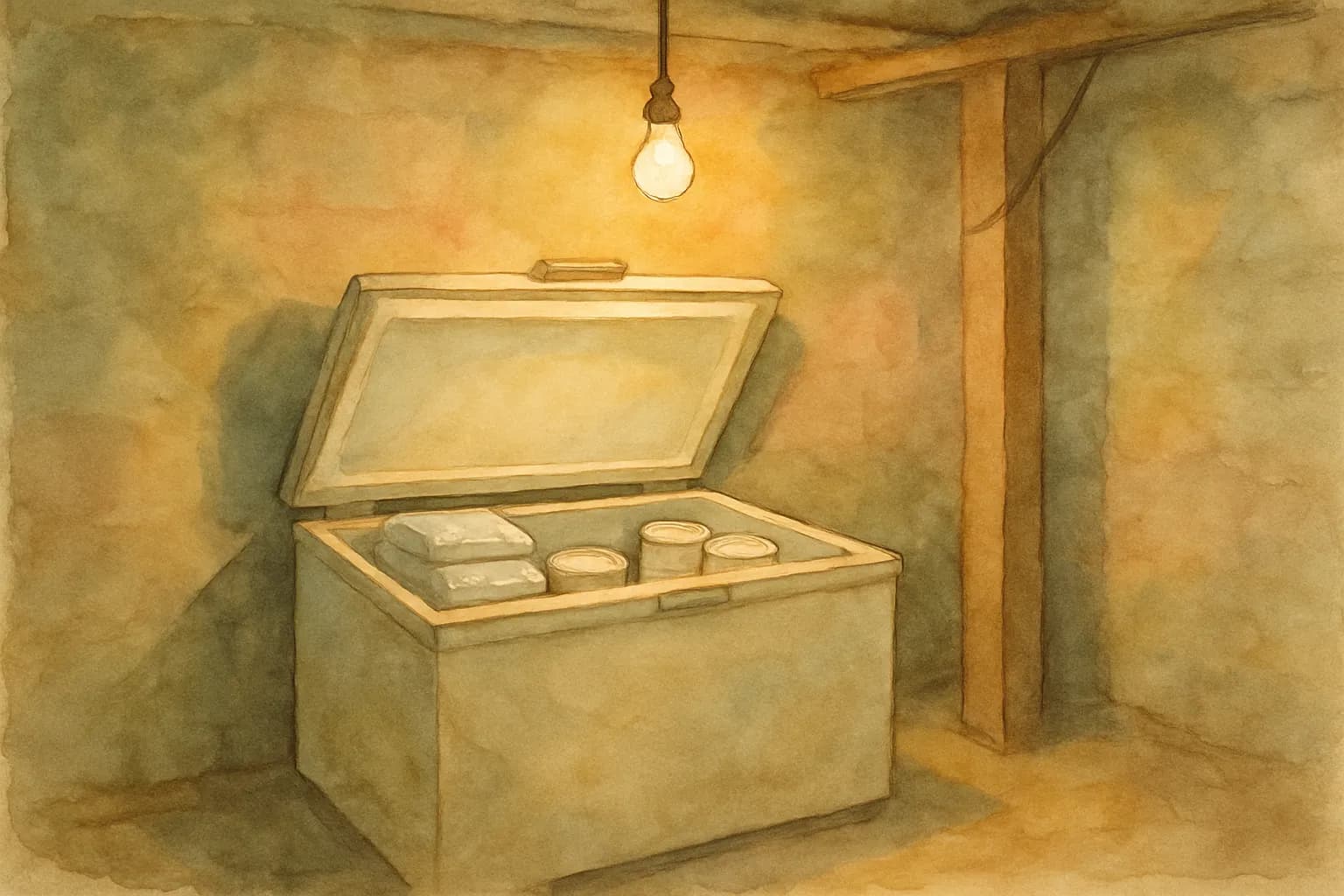
Your grandmother's freezer was not for ice cream.
It was for emergencies. It was for unexpected company. It was for the day somebody dropped by at four in the afternoon and stayed past supper. It was for the time the snowstorm hit and the roads were closed for two days. It was for the grandchildren who showed up after school, hungry, expecting something.
Every American grandmother had roughly the same ten things in her freezer, and they had been in there for between six weeks and four years, depending on the item and the household. Here is what was in hers, and what each item was actually for.
1. The unidentified meat wrapped in white butcher paper
Bottom shelf, back corner, labeled in pencil with something like "C 7/82" or "pork 4/79." The label had faded. The handwriting was hers, but the date no longer made sense, because she'd been adding new packages on top for years and the rotation had gotten away from her.
She knew what it was. You did not. She would defrost it, evaluate it, decide it was fine, and serve it to you. You ate it. It was fine.
2. The half a loaf of bread
The end of a loaf of Wonder Bread, wrapped in the original bag and twist-tied tight, kept in the freezer to prevent waste. She thawed slices in the toaster when she needed them. The bread was fine. It had been there since the spring.
There was also, sometimes, half a loaf of homemade banana bread, wrapped in foil, frozen in a single slab, for the day somebody dropped by.
3. The ice cream sandwiches behind the frozen peas
The frozen peas were the camouflage. The ice cream sandwiches were the treasure. They were not for general consumption. They were for grandchildren, specifically. She knew exactly how many were in there. She replaced them when she ran low.
If you found them on your own you were allowed to have one, but you were expected to ask. The honor system was in effect. She would have noticed if a sandwich went missing without permission, and she would have said something, briefly, in the next conversation.
4. The pound cake wrapped in two layers of foil
Always. There was always a pound cake in the freezer.
Sara Lee, mostly, because the Sara Lee pound cake thawed well and tasted nearly identical to fresh. Sometimes a homemade one from her own pound cake recipe, made in a batch of three at Easter, one served fresh and two frozen for later in the year.
The pound cake was for company. If somebody dropped by, you took out the pound cake, sliced it while it was still half-frozen, and served it with coffee. The thawing took about an hour, and the conversation took about an hour, so it always worked out.
5. The bag of chicken breasts
Frozen separately, then transferred to a gallon Ziploc, so you could take out one or two at a time without thawing the whole pack. She bought them on sale, divided them into individual portions, and froze them with the kind of efficiency that came from a Depression childhood.
There were always at least six chicken breasts in there, and they rotated through her freezer on a cycle she had not consciously planned but always maintained.
6. The Thanksgiving turkey, in February
She had wrapped it in foil after Thanksgiving, in chunks, with the intention of using it in soup. She did, eventually, in January. But there was still a small foil-wrapped package marked TURKEY 11/72 in the back of the freezer, and she had been meaning to use it for several months, and at some point she would.
When she found it, sometime in the spring, she would thaw it, evaluate it, decide it was fine, and put it in a soup. The soup was excellent. The turkey was, as always, fine.
7. The Tupperware container of unidentified soup
Plastic Tupperware, sealed with the original Tupperware lid that had been hers since 1968. The label said "soup" or sometimes just "S." She had made it in October. She would eat it in March. It would be fine.
The soup, thawed and reheated, was almost always better than the day she'd made it. She knew this. The freezer was, for certain foods, a slow improvement device, and she had figured this out without ever reading an article about it.
8. The bag of bones for stock
Chicken bones, beef bones, the carcass of a roast turkey, all in a gallon bag in the back of the freezer, waiting. When she had accumulated enough, she would make stock. Some grandmothers did this every two weeks. Some did it twice a year. But all of them saved the bones, because the bones made stock, and stock was the foundation of soup, and soup was what fed a family for two days when the budget was tight.
She would have laughed at the idea of buying stock in a carton. The stock she made from the bones in her freezer was better, and free.
9. The frozen casserole
Wrapped in foil, sometimes double-wrapped, with reheating instructions written on a piece of masking tape stuck to the top. Sometimes the casserole was for company. Sometimes it was a duplicate she had made when she made one for somebody else, and frozen the second for her own family.
The frozen casserole was the original meal kit. She made two of everything, ate one, and froze the other. The freezer was full of these. She could feed her family for two weeks from the freezer alone, without going to the store, and on a difficult month she sometimes did.
10. The popsicles for the grandchildren
The cheap, sticky, multicolored popsicles in the plastic bag, the kind you snipped open with kitchen shears. She had bought them in July. It was now February. They were still there.
They were not for her. They were for the kids who might come by. She kept them stocked the way she kept the ice cream sandwiches stocked — as a small, sweet, free gift she could hand to a small person who showed up at her back door. The freezer always had something a child would want, and the child would know it, and the visit was a little easier because of it.
The freezer was never really about the food. It was about being ready for whoever might walk through the door, whenever they happened to come.
Get a new story every Sunday morning.
One email a week. No spam. Unsubscribe anytime.
If this brought back a memory, you might also like
What Summer Sounded Like Before Air Conditioning
Sound traveled differently when the windows were open. The whole neighborhood was a single shared acoustic space, and you lived inside it.