10 Magazines That Lived on Every American Coffee Table
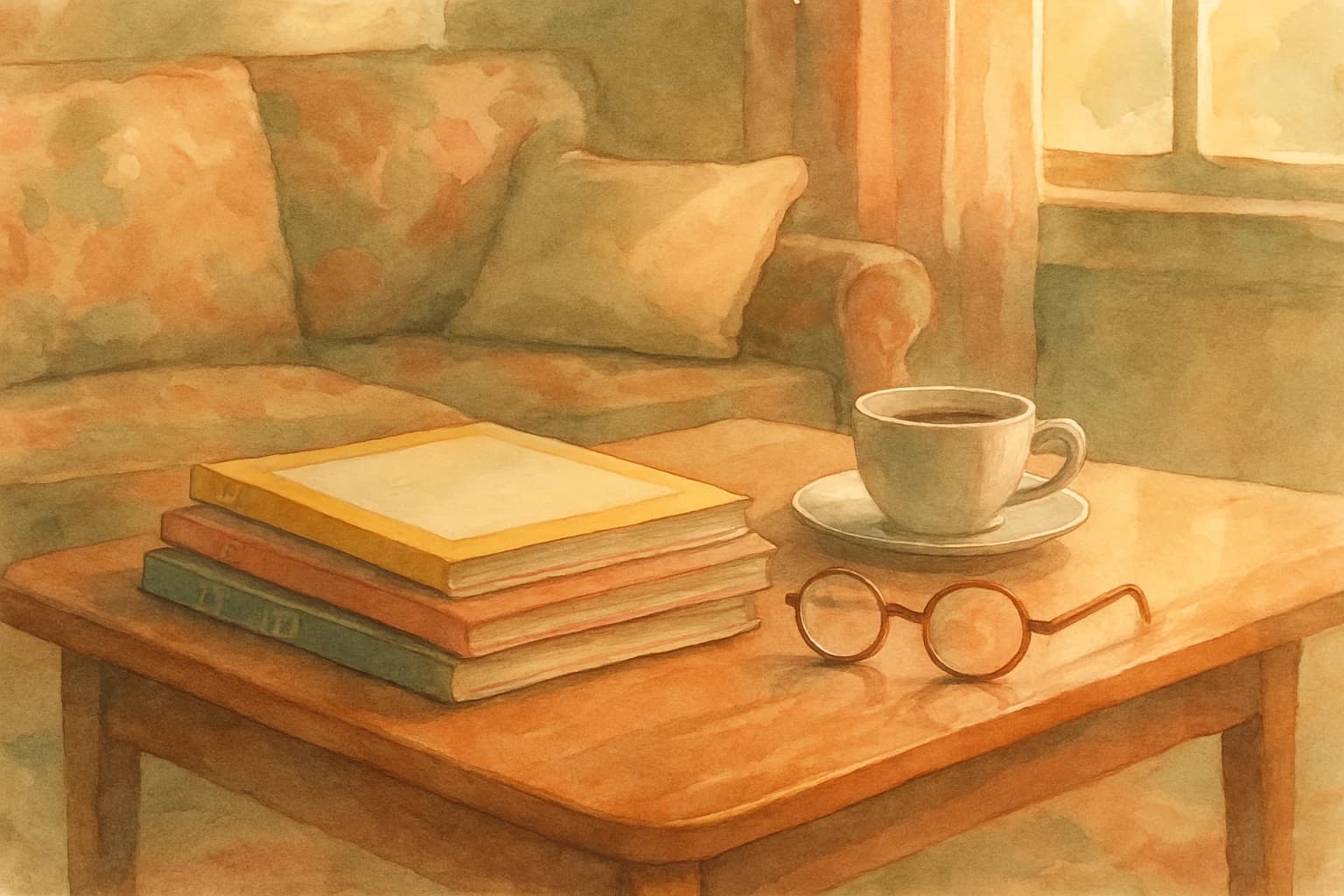
There was a stack on the coffee table.
Some of the magazines were current. Some were from three months ago. Some were from a year ago and nobody had ever quite gotten around to throwing them out. They sat in a slightly fanned arrangement, with the most recent on top and the older ones drifting to the bottom, and the whole stack served as the family's casual reading material whenever anybody had ten minutes and a chair.
This was the American coffee table of the mid-twentieth century, and every household had one, with roughly the same magazines on it. Here are ten you almost certainly remember.
1. Reader's Digest
The little one. Pocket-sized, about a hundred and fifty pages, designed to fit in a purse or a coat pocket so you could read it on the bus or in a waiting room. It came monthly. Your grandmother subscribed for fifty years.
The format was a mix of condensed articles from other publications, jokes, true-life dramatic stories, and the famous Word Power vocabulary feature. The whole magazine could be finished in an evening, which was the point. It was the magazine for people who wanted to keep up without committing to anything long. Subscription circulation peaked at over seventeen million households in the 1970s, which made it the most-read general magazine in America.
2. Life
The big one. Oversized format, thick stock, photographs that filled entire pages and sometimes entire spreads. Life was the magazine you actually sat down with -- you didn't read it standing up, the way you might thumb through Reader's Digest. The photographs were the reason. It published the iconic American photojournalism of the twentieth century: the war photos, the moon landing, the civil rights images, the celebrity portraits.
It went to a weekly publication schedule that wasn't sustainable in the television era, and the original weekly run ended in 1972. Most coffee tables had a stack of back issues going years deep, because nobody could bring themselves to throw out the photographs.
3. Look
Life's competitor. Slightly less prestigious, slightly more accessible, similar oversized format. It ran from 1937 to 1971, ended a few months before Life did, and lived on the same coffee tables. People sometimes mixed them up in memory because they served the same function -- the big visual magazine you sat with on a Sunday afternoon.
4. National Geographic
The yellow spine. Everyone had a stack going back at least a decade, sometimes longer, because nobody could throw away a National Geographic. They felt too important to put in the trash. The yellow spines accumulated on bookshelves, in basements, in the den.
It was the family's window onto everywhere else. Tribal cultures on the Sepik River. The Serengeti. Underwater Cousteau expeditions. A piece on the Vatican. A piece on Antarctica. The magazine ran for over a hundred years before its print circulation collapsed in the 2010s, and the back issues in your parents' basement are probably still there. They're not worth much resale, but they're impossible to throw away.
5. TV Guide
The small one, weekly, with the listings grid in the middle. It told you what was on every channel every day of the week, from morning to late night, in a format that required some genuine layout cleverness. You marked your shows with a pen. Your father claimed it for Monday Night Football week. The kids fought over it on Saturday morning to see what cartoons were on.
By the 1970s, TV Guide was the most-read magazine in America, sometimes outpacing Reader's Digest in actual circulation. It was on every coffee table in the country, often the only thing on the table when other magazines had been put away. The grid stopped making sense once cable arrived and the channel count exploded, and the magazine never really recovered.
6. Good Housekeeping
The women's magazine of record. Recipes, household advice, fashion, the Good Housekeeping Seal of Approval on consumer products. Your mother had a subscription, and the magazines went onto the coffee table or into a stack in the kitchen. Recipes were torn out and put in the recipe box.
The "Seal" was a real consumer institution. Products that had earned it could put the seal on their packaging, and a great many American purchasing decisions were made on the basis of whether something carried the Good Housekeeping endorsement. The magazine was, in effect, an early consumer-advocacy publication that lived on every coffee table in middle America.
7. Ladies' Home Journal
Good Housekeeping's competitor. Almost identical scope -- home, family, recipes, fashion -- with slightly different editorial sensibility. Most households subscribed to one or the other. A few subscribed to both, which felt vaguely excessive but happened.
The two magazines also published serialized novels in many decades, which is a forgotten function of the women's magazines: they were a major venue for popular fiction, especially fiction aimed at women, and a great deal of mid-century American reading happened in installments inside them.
8. Better Homes and Gardens
The home-improvement and decorating side. Pictures of beautifully kept American houses. Garden plans. Recipes again, because every women's magazine had to have recipes. The annual Better Homes and Gardens Cookbook, with the red-and-white plaid cover, became one of the most-owned cookbooks in America, and the magazine was the marketing engine for it.
The magazine also gave its name to a real estate franchise eventually, which is the kind of brand extension that only happens when a magazine is genuinely embedded in American domestic life.
9. The Saturday Evening Post
The Norman Rockwell magazine. Famous covers, family-friendly fiction, the kind of nostalgia that the magazine itself was actively producing while it was being published. It declined through the 1960s and finally folded in 1969, though it was revived later in different formats.
The covers were the thing. Most American households had at least one Saturday Evening Post cover framed somewhere, usually the Thanksgiving dinner painting or the doctor with the boy who needs a shot. The covers became the visual shorthand for a particular vision of American family life, and the magazine was the delivery mechanism.
10. The local newspaper's Sunday magazine
The local insert, separate from the regular paper, glossy or semi-glossy, with local feature stories, a TV listings supplement, sometimes a crossword. Every major city's Sunday paper had one. The New York Times Magazine is the only one most people would now recognize, but every paper of any size produced one.
It was the Sunday reading. Your father took the news section, your mother took the magazine, the kids took the funnies, and the household read its way through the morning. The Sunday magazines are mostly gone now, casualties of the same decline that's taken the newspapers themselves, but they were once part of the basic American Sunday.
Almost every magazine on this list has either folded or shrunk to a fraction of its former size. The coffee table itself has thinned. Most American households now don't have a single magazine in regular delivery, where in 1972 it would have been unusual to have fewer than four.
What's gone with the magazines isn't just the reading material. It's the casual, ambient, slightly-out-of-date reading that filled the small idle minutes of American household life. You picked up the magazine when you sat down to wait for dinner. You flipped through it during commercials. You read an article on a rainy Sunday afternoon, finished it, set it back on the stack. The magazine was always there, requiring nothing, offering something whenever you wanted it.
The screen has replaced the function. The screen does not feel the same in the hand, and the stack of magazines on the coffee table is not the same object as a phone on the coffee table. We notice the difference even when we can't quite articulate it.
What magazines were on your coffee table growing up? Which subscription has your family kept the longest? Tell us in the comments -- we'd love to hear.
Get a new story every Sunday morning.
One email a week. No spam. Unsubscribe anytime.