10 Sounds the American Kitchen Made Before the Sun Came Up
The house was asleep, and the kitchen wasn't.
Somebody was always up before everyone else. A mother, usually, or a grandmother staying the week, or a father who left for the mill at five thirty and needed coffee before he could face the dark. That person moved through the kitchen in the blue hour before sunrise, and the kitchen made its own particular noise while they did it. Nobody else heard most of these sounds directly. They filtered up through floorboards and heating vents and half-closed doors, into the sleep of children who would later recognize them without ever having consciously learned them. Here are ten.
1. The percolator's slow climb
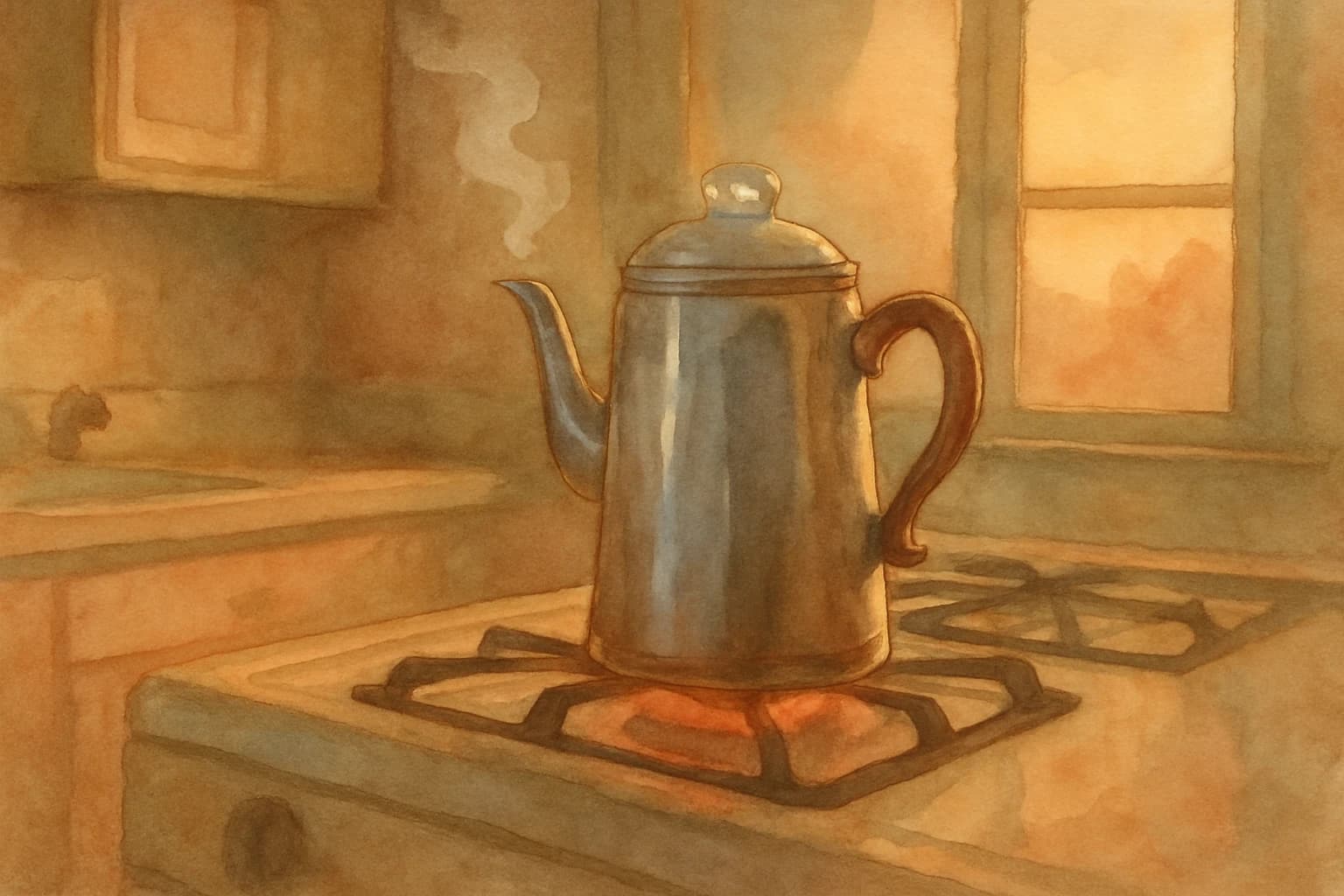
The percolator didn't just make coffee, it performed the making of coffee, out loud, over several long minutes. The sound started as a low gurgle and built to a steady, insistent chugging, then thinned back down as the pot approached done. You could tell how close the coffee was by the pitch alone. A percolator left on too long made a different sound entirely, thinner and more frantic, the sound a mother would catch from two rooms away and come running for.
2. The refrigerator door's particular suction
Old refrigerators sealed with a rubber gasket that had to be pulled against real resistance, and the sound was a soft thock followed by a huff of cold air escaping into the room. It was heavier than the sound a modern refrigerator makes. You could hear it through a wall and know exactly what had happened, someone getting milk, someone checking what was left from last night.
3. The screen door hinge, even in the dark
Somebody letting the dog out before six. The spring stretched, held a beat, then snapped the door shut with a sound that had a rhythm to it, a specific two-part clap that every kid in the house had memorized without trying. If the door didn't slam, something was wrong, someone was holding it shut on purpose so it wouldn't wake the baby.
4. The gas burner's tick before it caught
Before electric ignition, lighting a gas stove meant striking a match and holding it near the burner while the gas hissed out, waiting for the catch. There was a ticking sound in some stoves as the pilot light did its work, then a soft whump when the flame took. It was one of the only sounds in the kitchen with a hint of danger in it, modest but real, which is probably why kids were told to stay back from it.
5. The bread knife against the cutting board
A serrated blade dragging through a fresh loaf makes a sound unlike any other kitchen tool, a dry, sawing rasp that stopped and started as the knife worked through the crust and into the soft middle. Mothers cutting sandwiches for school lunches did this every weekday morning for years, the same knife, the same board, the same steady strokes per loaf.
6. Water running through old pipes
Older houses with aging plumbing had pipes that announced themselves. Turning on the kitchen tap sent a shudder through the walls, sometimes a full knock, before the water settled into a steady flow. Kids who grew up in these houses could identify which faucet had been turned on, upstairs or down, just from the particular clank the pipes gave off.
7. The toaster's mechanical drop
Not the ding, the drop. Older toasters released their spring with an audible clack, a sharp metallic snap that meant toast was up, followed by the smell a few seconds later. The two sounds together, the snap and then the burnt-edge smell if someone forgot to watch it, are fused in a lot of people's memory as a single event even though they happened seconds apart.
8. A chair leg scraping linoleum
Somebody pulling a chair back from the table to sit down with the paper or the coffee made a specific dragging sound on linoleum or vinyl tile, sharper than it would be on carpet, softer than it would be on wood. It was the sound of a person deciding to sit still for a few minutes before the day started, which in a busy house was not a given.
9. The clock radio clicking on low
Some kitchens had a radio on the counter set to a local AM station, tuned low enough not to wake anyone but present enough to fill the silence with a farm report or a weather forecast or the tail end of a hymn. It clicked on with a faint mechanical sound before the sound of the announcer's voice arrived a half-second later, the tube warming up.
10. The metal spoon against the pot
Oatmeal, usually, or cream of wheat, stirred slowly with a metal spoon against the bottom of a saucepan to keep it from sticking. The sound was rhythmic and unhurried, a scrape and a pause, a scrape and a pause, and it was one of the few kitchen sounds that meant somebody was cooking specifically for a child who wasn't even downstairs yet.
What wasn't worth keeping
Some of this is worth being honest about. The early kitchen also meant early labor, and the person doing it was almost always a woman, up before her husband and children by choice or by expectation, working through chores that nobody else in the house saw or acknowledged. The gas stove that ticked before it caught also occasionally didn't catch, and house fires from unattended burners were a real and recorded danger, not a nostalgic footnote. The percolator made good theater but mediocre coffee by any honest modern standard, bitter and over-extracted more often than not. None of this needs romanticizing. The sounds were real. The conditions that produced them were not always fair, and the coffee, if we're being honest, was not always good.
What we traded them for
Modern kitchens are quieter, and that's mostly an improvement. The refrigerator seals without a thock. The coffee maker brews behind a closed lid with a timer, no percolating drama required, no ruined pot if you're five minutes late. Nobody needs to strike a match to get breakfast started. These are real gains, and nobody who lived through a house fire started by an unattended burner would trade the safety back for the sound.
But something did go quiet along with the danger and the labor. A kitchen that makes no sound before anyone's awake is a kitchen where nobody got up early to do anything for anyone else. The percolator's climb, the knife against the board, the spoon in the pot, these were the audible evidence of a person working alone in the dark on behalf of people who were still asleep. You don't have to want the gas stove back to notice that the silence replaced something along with the risk.
What did your kitchen sound like before anyone else was up? Was there one sound in particular that meant someone was awake and thinking of you?
Tell us yours -- we'd love to hear it.
Get a new story every Sunday morning.
One email a week. No spam. Unsubscribe anytime.
If this brought back a memory, you might also like
The Shortbread Tin That Became a Sewing Box
Inside the blue Royal Dansk tin, the cookies were gone by Christmas week, replaced by loose buttons and a spool of thread that stayed for decades.