10 Unspoken Rules That Ran the First Ten Minutes of a Grandmother's Visit
You were not allowed to sit down first.
That was the first rule, unspoken but absolute. The door opened, she appeared, and the next five minutes belonged entirely to her. You stood there with your coat still on while she looked you over, said something about how tall you'd gotten, and set the entire machinery of the visit into motion before you had a chance to form a single preference about how the afternoon might go.
Every grandmother had her own sequence. The details varied by region, by decade, by what was on the stove when you pulled into the driveway. But the general structure held across millions of households: arrival triggered a ritual, and the ritual was hers to run.
1. She looked you over
Not just a glance. A proper inspection. She held your face in both hands, or she stood back with her arms crossed, or she grabbed your chin and tilted it toward the light from the window. She was checking something -- she was always checking something. Whether you looked pale. Whether you'd grown. Whether you looked like you'd been eating enough, which you probably had not, by her measure.
She said something during this. "You're thin." Or "Look at you." Or just your name, said twice, like she was confirming you were really there.
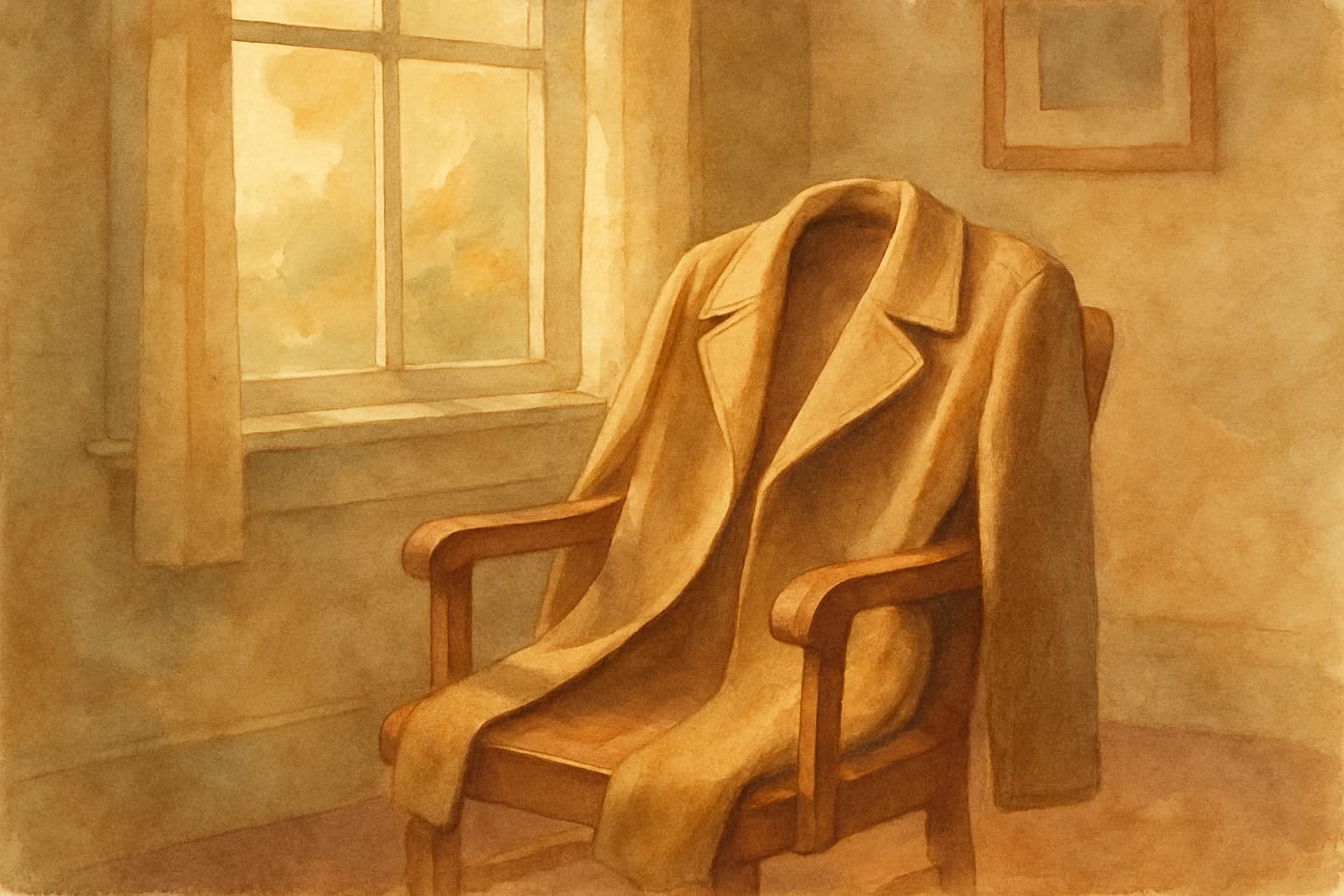
2. She took your coat
And she didn't just take it. She checked the pockets, or smoothed the collar, or said something about the zipper, or carried it off to the bedroom herself instead of leaving it on a chair like you would have. She had a place for coats. She had a place for everything, and she was already putting everything in its place.
3. She asked if you were hungry before you'd cleared the doorway
The answer didn't particularly matter. Saying yes started the food. Saying no also started the food, just more slowly, because she was already planning to feed you and your answer was input she was going to run through her own calculations before reaching the same conclusion.
The question was not really a question. It was the opening move.
4. She told you what was already made
This was the inventory. Usually delivered while walking toward the kitchen, not looking at you. "I made the pot roast. There's soup from yesterday. I put up a cake this morning. The rolls are in the oven." The inventory was comprehensive and delivered at a pace that didn't invite negotiation. By the end of it you knew what the visit was going to taste like.
Some grandmothers did this at the door. Some did it at the kitchen threshold, with the refrigerator already open. Some did it at the stove, lifting lids and pointing. The location varied. The inventory always existed.
5. She called to your grandfather
"Earl, they're here." Or she just said his name once, loud enough to carry through the house, and waited. He appeared from wherever he'd been -- the chair, the back porch, the garage -- and the household registered your arrival through this second person. The grandmother's call and the grandfather's emergence were a single unit of domestic theater. One happened and then the other happened, and then you were properly arrived.
6. She touched your hair
A hand on top of your head. Sometimes a light squeeze. Sometimes she just smoothed it once, almost absentmindedly, the way you'd touch something to confirm it was real. She did this even when your hair was clean and fine and didn't need touching. The gesture was not about the hair. It was about her hands needing to confirm that you were actually standing there in front of her.
7. She went back to the kitchen and kept talking from it
This one was distinctive. You were still settling -- your coat was gone, you hadn't found a chair yet, your mother was talking to your grandfather -- and your grandmother was already back in the kitchen, doing something at the counter, and her voice was coming through the door without interruption.
She had been mid-task when you arrived, or she had something she was returning to, and she ran the arrival from two rooms at once. The kitchen door framed her for a moment and then she was gone and her voice continued. You could follow her in there or you could stay in the living room. Either way, the commentary continued. The house was small enough that it all connected.
8. She produced something to eat immediately, before the meal
Not the meal. Something before the meal, to hold you. A plate of crackers with a wedge of cheese. A few cookies transferred from a tin to a small plate. Nuts from a bowl she produced from somewhere. The something-before had a particular character: assembled quickly, presented without ceremony, placed on the table or the arm of your chair. It was meant to bridge the gap between arrival and whatever was actually coming.
The something-before was never the main event. It was her acknowledging that you had traveled to get here and that traveling made people hungry.
9. She said your full name at least once
Not in trouble. Just your name, the whole thing, said with a particular weight. She was the one person who used all of it, who gave the middle name its full due. When she said it, it sounded like something she'd been saving.
Your parents used your full name when you were in trouble. She used it because she'd known it since before you were born and it was hers to say, and saying it was a way of marking that you were here, in her house, for the afternoon.
10. She told you the family news before you asked
Who'd been sick. Who'd had a baby. Who'd moved. Who'd done something impressive or something mildly concerning. The news arrived in the first ten minutes because she'd been holding it for your visit, and the visit was now here, so the news came out.
You sat or stood and received it. Some of it you already knew. Some of it you'd hear again later in the visit, in a different version, with different emphasis. But the first telling happened at the door, almost, while the coats were still being sorted and the kitchen was already starting to smell like whatever had been in the oven since morning.
She was organized that way. She had a plan for the visit, and she started it the moment the door opened.
A note on what's better now, said plainly: some of these rituals ran on a current of anxiety that nobody named. The inspection that checked whether you looked thin was sometimes welcome and sometimes a lot. The food that appeared before you'd even asked was generous and also, occasionally, a form of pressure that had nowhere to go. The household that ran on her schedule, for her sequences, left the guests -- even the beloved grandchildren -- in a slightly passive position that not everyone loved.
The grandmothers who do this now, the ones who learned it from those grandmothers, sometimes do it better because they've relaxed the edges. The inventory still exists, but there's more room to say you're not actually hungry. The coat gets taken, but sometimes it lands on a chair instead of a hook in a designated closet. The ten-minute sequence still runs, but it runs a little looser, because time and observation have worked on it.
What you'd bring back, if you could, is the intention underneath the ritual. She had been waiting for you. She'd made things. She'd thought about what you'd want before you arrived, and the first ten minutes were the proof of that thinking, laid out in a deliberate order. The modern visit, with its casual scheduling and its "don't worry, we'll just order something," often loses that. The waiting. The preparing. The proof that you were expected.
That part was real.
What did your grandmother do the moment you walked in? Was there something she said every time, or something she always had waiting? Tell us about yours in the comments below.
Get a new story every Sunday morning.
One email a week. No spam. Unsubscribe anytime.
If this brought back a memory, you might also like
15 Things That Lived in the Glove Compartment and Solved Every Emergency
Everything inside was slightly too warm from the sun and grayish with road dust, waiting for a flat tire or a nosebleed.