10 Wednesday Cafeteria Rituals That Required No Questions
Wednesday in an American school cafeteria had a menu, technically, but everyone knew the menu was theater. The real menu was in the kitchen ladies' heads, and it had been the same for years. You could walk in blind on a Wednesday, in Ohio or Texas or upstate New York, and know roughly what was coming. Here's what showed up, and why nobody at the table ever asked a single question about it.
1. The Rectangular Pizza
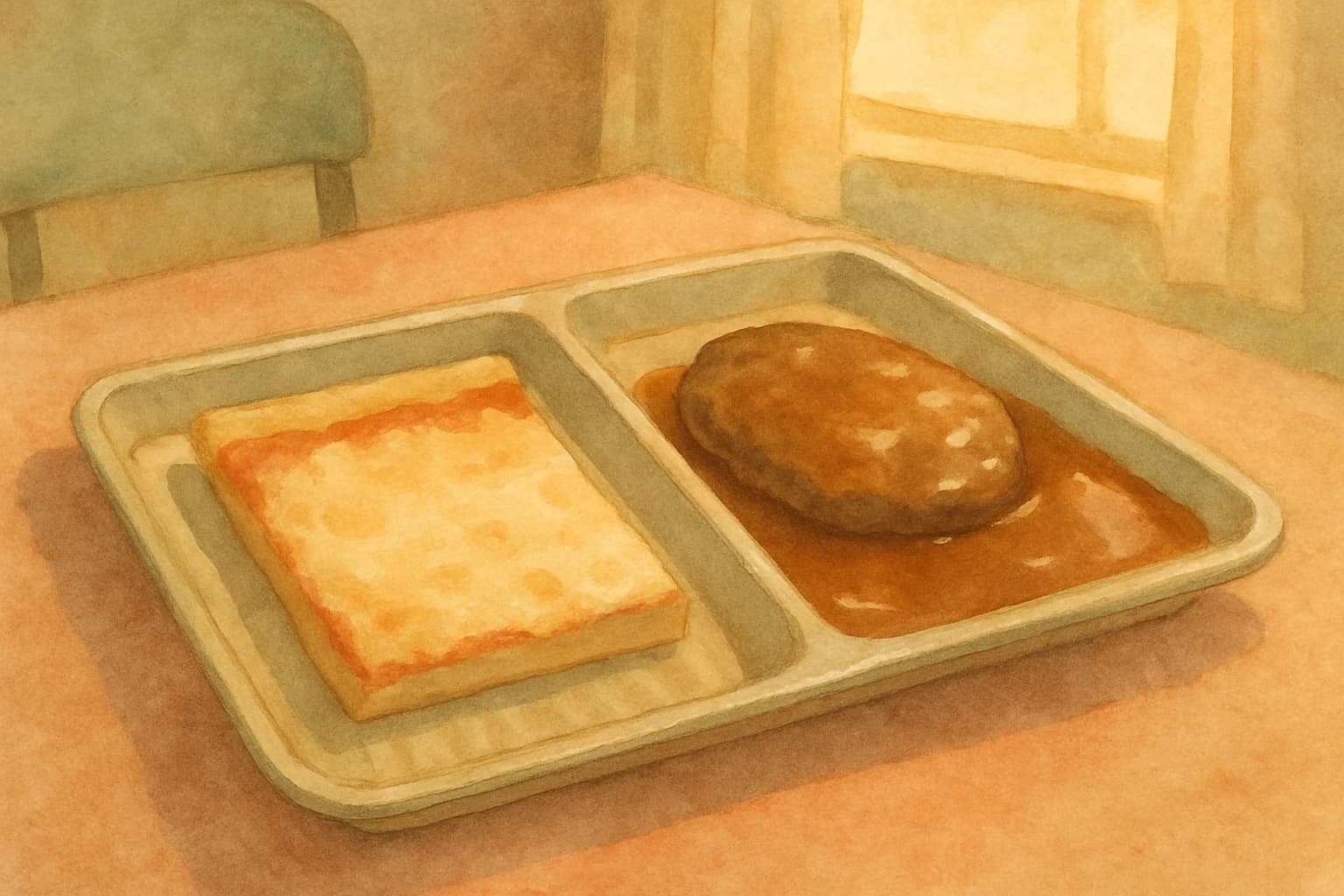
Square pizza, cut into squares, on a tray with ridges. The cheese didn't quite reach the corners. The crust was more like a cracker than bread, and it stayed that way whether you ate it hot off the line or cold twenty minutes later after standing in the milk line. Nobody called it "square pizza." It was just pizza, and the fact that all pizza elsewhere in your life was triangular and this pizza was square never registered as strange until you were an adult describing it to someone who'd never seen it.
2. Salisbury Steak, Swimming
A gray patty under brown gravy, next to a scoop of mashed potatoes doing the same thing under the same gravy. The whole tray had the structural integrity of wet cardboard by the time you sat down. Kids ate it anyway, because it was Wednesday, and Wednesday was Salisbury steak, and that was simply how the week was organized. Nobody in the history of the American public school system ever asked what part of the cow this actually was.
3. The Milk Carton You Fought to Open
Half-pint, cardboard, the little tabs on top that you pulled apart and folded back. Some kids could open theirs in one motion. Some kids spent the better part of lunch working the thing open with their thumbnails while the milk got warmer and less appealing by the minute. Chocolate milk was the aspirational choice. White milk was what you got when the chocolate ran out three minutes into the lunch period, which it always did.
4. Green Beans From a Can, Boiled Further
They arrived already defeated. Whatever nutritional case existed for green beans had been fully surrendered somewhere between the can and the steam table. They were gray-green, soft the whole way through, and served in a portion exactly large enough to satisfy a health inspector without threatening to actually get eaten. Most trays went back to the dish window with the green beans untouched, in the same three-bean shape they'd been served in, barely disturbed by a fork.
5. The Ice Cream Cup With the Wooden Paddle
A small paper cup of vanilla or a vanilla-chocolate swirl, sealed with a foil lid, served with a flat wooden paddle instead of a spoon. The paddle was useless as an eating tool and everybody used it anyway, scraping at the frozen edges while the middle stayed too hard to touch. Some kids peeled the foil lid off and licked it clean before touching the ice cream at all. This was considered correct procedure and nobody was taught it. You just knew.
6. Tater Tots, in Bulk
A full scoop, sometimes two if the lunch lady liked you, dumped into the corner compartment of the tray. Tots were the one food on the entire Wednesday menu that required no negotiation. Nobody left tots on the tray. Nobody swapped tots for a friend's dessert. They disappeared before the tray reached the table, sometimes before the kid sat down, eaten standing in the lunch line with a hand cupped underneath in case one fell.
7. A Roll That Existed Purely as a Vehicle
A soft white roll, occasionally with a pat of margarine already melting into it if you got there fast enough. It had no flavor of its own. Its entire purpose was to be the thing you used to push the gravy around, or the thing you ate last because you'd saved it, or the thing you threw at a friend two tables over when the lunch aide wasn't looking. The roll asked nothing of anyone and got exactly the respect it deserved, which was none, and also everyone remembers it specifically.
8. The Fruit Cocktail in Heavy Syrup
Little plastic cups, or sometimes a scoop straight from the giant can, with peaches and pears and grapes and always exactly one maraschino cherry that half the kids fought over and the other half didn't want. The syrup itself was the real product. Kids drank it straight from the cup after the fruit was gone, tilting the cup back like a shot glass, and no cafeteria worker ever stopped them.
9. The Government Cheese Sandwich Nobody Called by That Name
Some Wednesdays it was a grilled cheese, made with the thick-sliced processed cheese that came in the giant blocks distributed to schools through federal commodity programs. It didn't melt so much as soften. It didn't brown so much as darken slightly at the edges. Kids ate two of these without comment, because the sandwich did its job, which was filling a rectangle of bread with something warm and yellow and calling it lunch.
10. The Brownie That Was Actually a Cake
Cut into squares from a full sheet pan, dense, sometimes with a thin layer of chocolate frosting that had started to crack by the time it reached your tray. It was called a brownie on the menu board, but it had the crumb structure of a chocolate cake, and everyone who has eaten a real brownie since knows the difference now, even if nobody knew it then. It was still the best thing on the tray most Wednesdays, and kids traded almost anything to get a second one.
What We Shouldn't Bring Back
The nutrition on most of these trays was thin, and the sodium content on the Salisbury steak alone would raise eyebrows today. The commodity cheese and canned green beans existed because federal surplus programs needed somewhere to put dairy and produce that had been overproduced, not because anyone had studied what kids should eat. A tray built mostly of gravy, white bread, and syrup-soaked fruit is not a model of school nutrition, and the reforms of the last two decades, more fresh produce, real fruit instead of canned, whole grains in the rolls, are genuine improvements that deserve to stick.
The lunch line was also not equally kind to everyone. Kids on free or reduced lunch were sometimes identified by the color of their ticket or the line they stood in, in full view of classmates. That particular cruelty, baked into how the system tracked who could pay, is one thing from this era that nobody should be nostalgic about. Whatever else the cafeteria got right, it got that wrong for a long time.
What's Actually Gone
What's gone isn't the food exactly. It's the total lack of negotiation around it. Nobody surveyed the students. Nobody offered a salad bar alternative. There was one tray, assembled the same way in Sacramento and in Syracuse, and you ate what was on it or you didn't eat, and either way the day moved forward. That kind of institutional confidence, right or wrong, doesn't really exist in cafeterias anymore, where kids can now choose between four or five different lunch lines built around dietary preference. The choice is better for the kids. It's also the reason nobody today has one single, specific memory of "Wednesday" the way an entire generation does.
What did your cafeteria serve on Wednesdays? Did your school have the square pizza too? Share your story in the comments -- we're listening.
Get a new story every Sunday morning.
One email a week. No spam. Unsubscribe anytime.