15 Sandwiches That Rotated Through the American Brown Bag
The brown bag went to school every day, and nobody thought much about it.
It sat in the cubby or the locker or under the desk, slightly flattened by books, until 11:45 or noon or whenever the bell rang and the cafeteria opened. Then you ate what was in it, because that was what there was. The sandwich was the centerpiece. The rest -- the apple, the chips, the cookie if it was a good day -- orbited the sandwich. Fifteen of those sandwiches rotated through American lunch bags for decades, in roughly the same order, and most of them are still recognizable today.
1. Peanut Butter and Jelly
The standard. The default. The one that appeared when nobody had thought about lunch the night before and nobody had time to think about it that morning either. A PB&J made in under two minutes from items that were always in the house. Grape jelly in most households, strawberry in a few. Creamy Jif in some households, chunky in others, which people had real opinions about.
What got lost in the transfer from kitchen to cubby was the structural integrity. By noon, the jelly had soaked through the bread on the jelly side and the bread had gone soft. If it was a warm September, the bag had sweated. The whole thing was slightly compressed. None of this mattered.
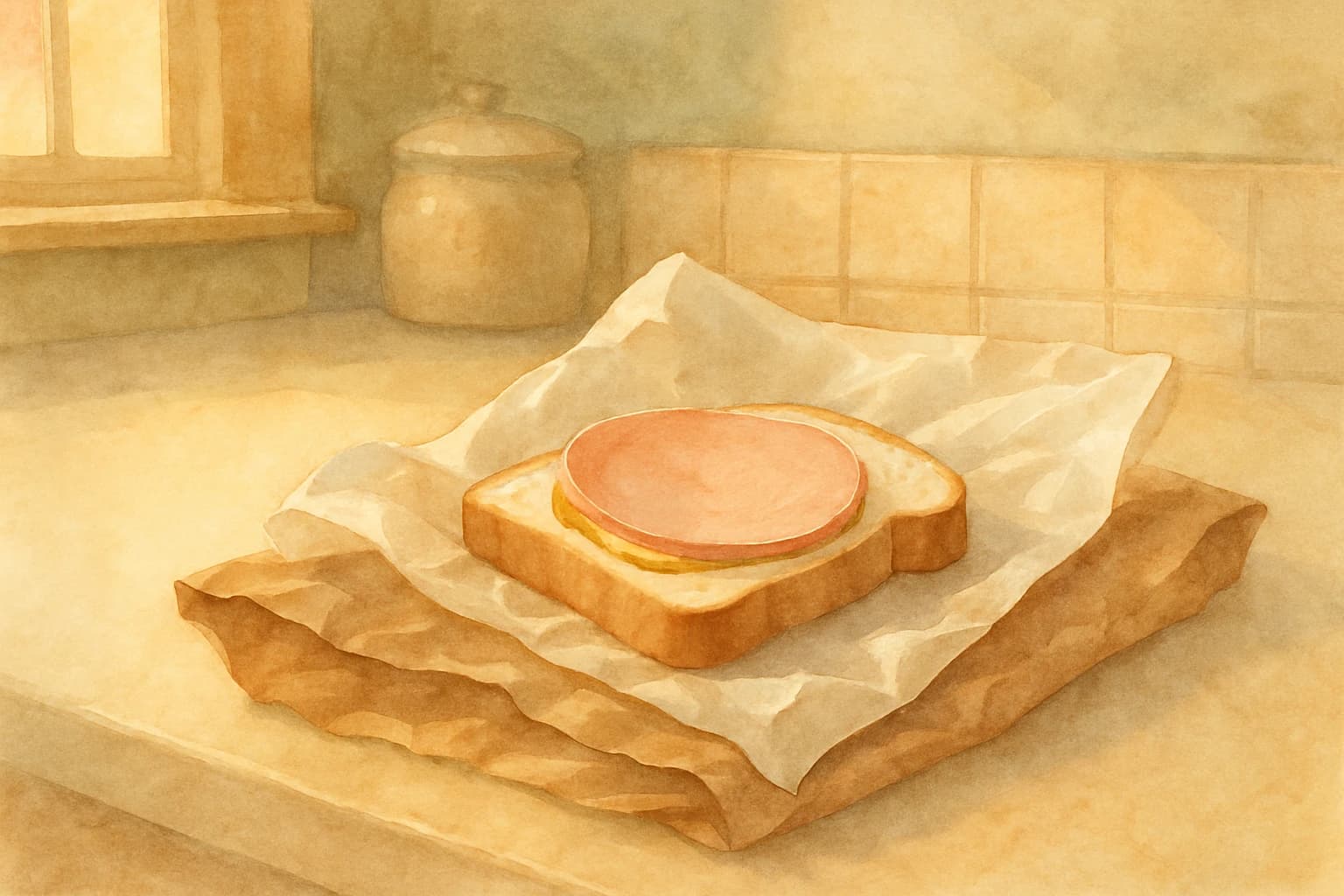
2. Bologna with Yellow Mustard
One slice of bologna, sometimes two, on white bread, with yellow mustard. No lettuce. No tomato. This was a lunch that could be assembled in under ninety seconds and required no refrigeration concerns because nobody was concerning themselves with refrigeration. The bologna was Oscar Mayer. The mustard was French's. The bread was whatever was in the bag on the counter.
3. Egg Salad
The egg salad sandwich was a Tuesday or Wednesday lunch, made from Sunday's hard-boiled eggs that had been sitting in the refrigerator since Easter or since dinner. The ratio of egg to mayonnaise varied by household, but the result was always yellow and soft and slightly wet. By the time the sandwich made it to school, the bread had absorbed the moisture from the filling. The taste held. You ate it and didn't think about it and moved on to the apple.
4. Tuna Salad
Same logic as egg salad, different can. A tin of Chunk Light Tuna in water, or in oil if your mother preferred that, mixed with Hellmann's mayonnaise and sometimes a stalk of celery if someone had bought celery. Tuna salad sandwiches were easy to identify at the lunch table from ten feet away. The kid next to you always knew what you were eating. This is the most polarizing item on the list, and probably the most vividly remembered.
5. Liverwurst on Rye
Not every household. But in the households where liverwurst appeared, it appeared regularly, because the adults who liked it really liked it and the kids had no say in the matter. Dark rye bread, a thick smear of liverwurst, sometimes a slice of raw onion that made the whole bag aromatic by morning break. If you grew up eating this, it tastes like childhood. If you didn't, the smell of someone else's lunch bag in fourth grade was a formative experience of a different kind.
6. Ham and Swiss on White
The step-up sandwich. Ham and Swiss meant someone had gone to the deli counter this week and bought actual deli slices rather than pre-packaged lunchmeat. Swiss cheese in the 1970s was a very specific thing -- the kind with the holes, in paper from the deli, cut thinner than the pre-sliced would be. This sandwich sometimes had mustard and sometimes had mayonnaise, and the household you grew up in had a firm position on this that you probably didn't question until you were in your twenties.
7. Cream Cheese and Olive
A regional sandwich, stronger in the Northeast and in households connected to Jewish deli culture, but present in enough brown bags to earn its place. Cream cheese, the soft plain kind from the foil block, spread thick on white bread or a soft roll, with pimento-stuffed green olives sliced into it. Slightly salty. Very rich. An unusual sandwich by any neutral measure, which is why the kids who had it in their lunch often traded it away to the one kid in the class who, inexplicably, loved it.
8. Grilled Cheese -- The Cold Version
The night before, someone made grilled cheese for dinner. There were two left over. They went in a paper bag for lunch the next day, cold, without reheating because reheating was not a concept that applied to school lunches. A cold grilled cheese is not a bad sandwich. The cheese has re-hardened slightly and the bread is no longer crisp but it still tastes like a grilled cheese, and the kid eating it knows what he had for dinner, and that's enough.
9. Sliced Turkey with Cranberry
This one had a season: November through January, when the leftover turkey was still in the refrigerator. Thin slices of leftover roast turkey on white bread, with a thin scrape of cranberry sauce from the can still in the refrigerator door. The cranberry made the bread turn slightly pink by noon. The sandwich tasted exactly like Thanksgiving in miniature. It had a two-week window of annual availability and was anticipated within that window by the kids who liked it.
10. Peanut Butter and Honey
The variation that appeared when you ran out of jelly. Or in households that had made a quiet philosophical choice in favor of honey. Slightly messier than PB&J because honey runs in a way that jelly does not, and if the lid on the honey bear was not tight, the bag had problems. But the taste is distinct -- sweeter, thinner, less fruity -- and the people who grew up eating peanut butter and honey rather than peanut butter and jelly carry a strong preference for it that they will defend.
11. Salami and Provolone
The Italian-American answer to the ham and Swiss. Hard salami, provolone cut from the wheel at the deli, sometimes on a hard roll if someone had gone to a bakery this week and more often on white bread. This sandwich held up better than most because the salami was dry-cured and the provolone was firm. It still tasted like itself at noon. The hard roll version, if you were lucky enough to have it, was the best iteration of the brown bag sandwich form that most American kids encountered.
12. Leftover Meatloaf, Cold
This is not a sandwich anyone requested. This is a sandwich that existed because there was leftover meatloaf in the refrigerator, and a slice of meatloaf between two pieces of bread was technically a lunch. Cold meatloaf firms up and slices cleanly. The ketchup glaze on top is still there. Some kids ate this willingly. Others ate it because it was what was in the bag. Everyone who had it remembers it.
13. Cucumber and Cream Cheese
The light lunch. The summer-adjacent lunch. Thin slices of cucumber on white bread with cream cheese, sometimes with a small amount of salt. This was a sandwich that someone's mother made when she was thinking about what sounded refreshing rather than what would be filling. By noon the cucumbers had released water and the bread was soft but intact. This sandwich had the highest trade value of any on this list, because the kids who didn't want it couldn't imagine wanting it, and the kids who did want it wanted it badly.
14. Pimento Cheese
Strong in the South, nearly absent from the lunch bags of New England. Pimento cheese was homemade in the households that made it and came from a glass jar in the households that bought it. Orange, soft, slightly spicy, spread thick on white bread. A pimento cheese sandwich at room temperature is exactly what it is. It doesn't pretend to be anything else. The kids who grew up eating it still make it or buy it; the kids who didn't know this sandwich at all have no frame of reference for it.
15. The Everything Sandwich
This is the one that used whatever was left. A single slice of ham because there wasn't enough for a full ham sandwich. A piece of American cheese because there was American cheese in the drawer. A slice of tomato if someone had bought tomatoes this week. A leaf of iceberg lettuce. Mustard because someone applied mustard when in doubt. The Everything Sandwich did not have a name. It was not planned. It was assembled by a parent running late on a Thursday morning who opened the refrigerator and made decisions in real time. It tasted different every time, and it was, despite everything, almost always fine.
A few of these don't belong in any lunch bag today, and there's no reason to pretend otherwise. The food safety logic around egg salad and tuna salad sitting unrefrigerated for three hours in a warm locker is not a logic that holds up to scrutiny. Room-temperature mayonnaise-based fillings in the pre-lunchbox-ice-pack era were a genuine food safety gamble that most families took without thinking about it, because everyone took it and nobody seemed to get sick, or at least nobody traced it. The insulated lunch bag with the ice pack is a genuine improvement, and the kids today are eating their tuna salad at a safer temperature than we were.
What sandwich lived in your lunch bag? What did you trade, and what did you guard? We'd love to hear your memory of this.
Get a new story every Sunday morning.
One email a week. No spam. Unsubscribe anytime.