The American Living Room That Nobody Actually Lived In
We had a room nobody was allowed to sit in.
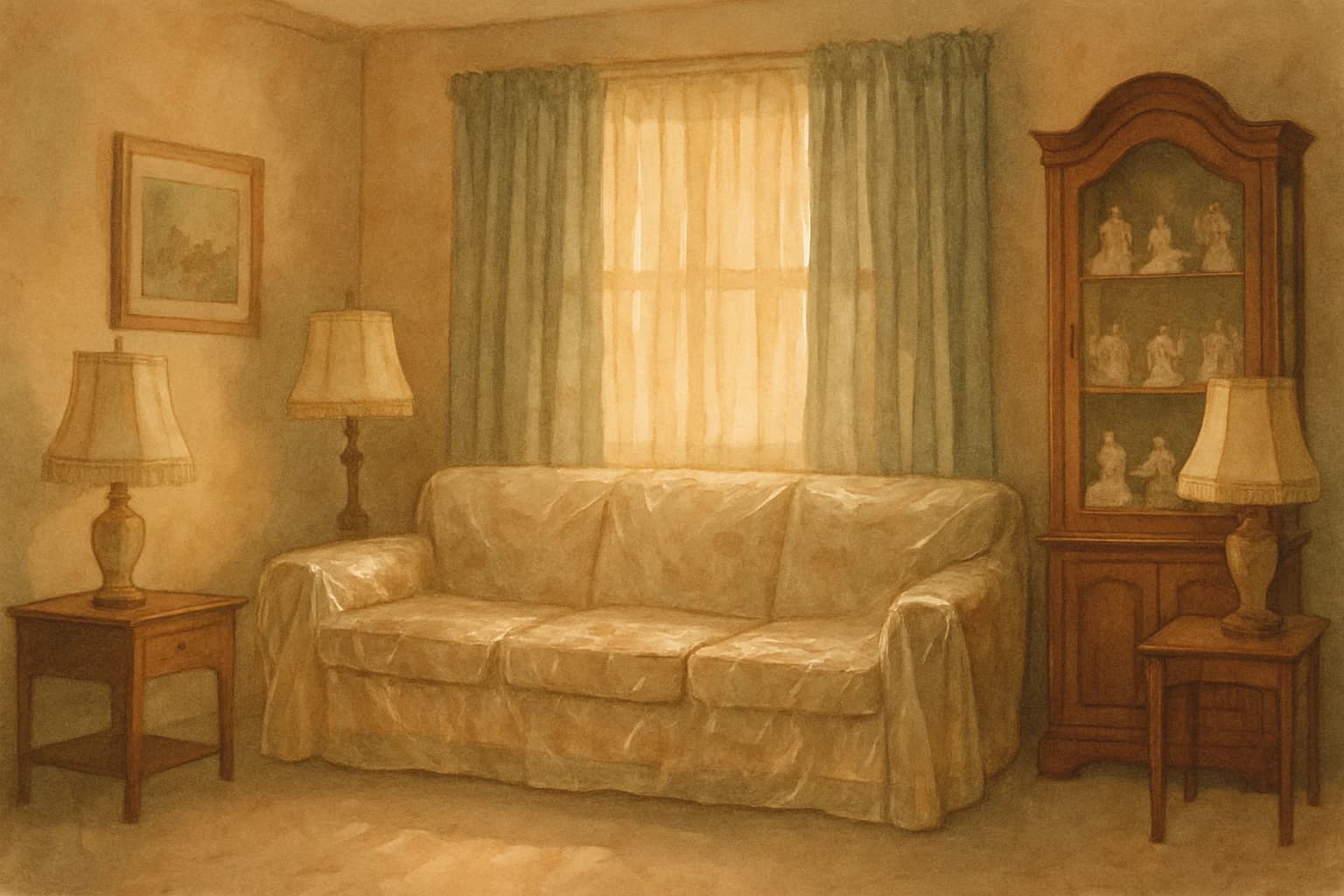
It was at the front of the house, off the entryway, with the good couch and the matching wingback chairs and the coffee table that was glass on top of an ornate wooden base. The carpet was a slightly lighter color than the carpet anywhere else in the house. There was a piano in the corner that nobody played. There was a lamp on a side table that was turned on perhaps four times a year. The room was clean. The room was always clean. The room was untouched.
This was the formal living room of mid-century America, and almost every middle-class house had one. It was the most expensive room in the house, by furniture cost, and it was used the least. You walked through it on your way to somewhere else. You did not stop in it. Your father read the paper in the den. Your mother watched television in the family room. The kids played in the basement. The dog was not allowed past the threshold.
Nobody lived in it. That was the whole point.
What the room was actually for
The formal living room was for occasions, and the occasions were specific. Adults coming over for cocktails. The minister stopping by after church. The piano lessons your sister briefly took. The Christmas tree, in December. The serving of after-dinner coffee when company stayed past the meal.
Maybe twelve to twenty occasions a year. The rest of the time, the room sat in a kind of decorative readiness, prepared for guests who came rarely. The vacuum lines were always fresh in the carpet. The throw pillows were always at the right angles on the couch. The room performed the absence of recent use.
This sounds slightly insane in retrospect, and it sort of was. But the function was real. The formal living room was the part of the house that was deliberately curated for the moments when outside eyes were on the family. Inside eyes -- the family's own -- could spend their daily time in the messier, more comfortable rooms. The formal room was a piece of household theater, kept ready for performance.
The furniture lasted forty years because it was never used
A normal couch lasts maybe ten or fifteen years. A formal-living-room couch lasted as long as the marriage. The fabric stayed pristine because no human butt ever touched it. The cushions retained their original shape because they were never sat on. The legs were unscuffed because no toy car ever rolled into them.
A great many older Americans inherited their parents' formal-living-room furniture in the 1990s and 2000s, in essentially the same condition it had been in when their parents bought it in 1965. The couches were structurally sound. The fabric was not even faded, because the curtains in the formal living room had also been mostly drawn for forty years, protecting the upholstery from sunlight.
The plastic slipcover phenomenon was the formal living room's most extreme expression. Some households actually covered the formal-room furniture in fitted, clear plastic -- the famous "plastic on the couch" -- to preserve it even more thoroughly. The plastic squeaked when you sat on it. It was cold in winter and sticky in summer. It was real, and it was widespread, especially in immigrant households where the formal furniture represented a major financial achievement that needed to be protected.
The room had a specific aesthetic vocabulary
You knew a formal living room when you walked into one. The vocabulary was consistent across millions of houses:
The couch was a sofa, not a couch. Often with carved wooden trim along the bottom edge or the arms. Sometimes Victorian-inspired, sometimes more midcentury, but always visually heavier than a family-room couch.
The end tables had drawers that contained nothing. They were drawers as furniture features, not drawers as storage.
The lamps were "occasional" lamps, meaning they existed for occasional use. They were heavier and more decorative than the lamps you actually read by. The shades were sometimes still wrapped in their original cellophane, even decades after purchase, in the most extreme houses.
There was usually a piece of "good" art on the wall -- a real framed print, sometimes a real oil painting from a craft fair, occasionally a real painting from an estate sale. The art in the formal living room was always more serious than the art elsewhere in the house.
There was almost always a curio cabinet or a china hutch with items that were never used -- the wedding china, the crystal glassware, the figurines collected over decades, the silver-plated tea service that came out twice a year.
The whole room communicated we have arrived, in a slightly stiff and aspirational way. The aspiration was the point. The room was the most public statement the family made about its own status, and the statement was made to a small audience of guests, infrequently.
What killed it
The open floor plan, mostly. New houses built after about 1985 increasingly didn't have a separate formal living room. The front door opened onto a great room that combined the living, dining, and kitchen functions into one large space. There was no room left to be "formal" because there was no separate room at all.
The decline of formal entertaining also did real damage. Cocktail parties at home, the after-church visit, the bridge club meeting at someone's house -- these social occasions thinned through the 1980s and 1990s, and the room that had been built for them lost its purpose. If nobody is coming over for cocktails, you don't need a room set up for cocktails.
The decline of separate "company manners" played a role too. Families used to keep two sets of behavior, one for inside the family and one for guests. The formal room was the architectural expression of this distinction. As the distinction faded -- as casual hospitality replaced formal -- the room stopped making sense.
By 2000, the formal living room was already a curiosity in new construction. By 2015, it was essentially gone. The remaining ones were in older houses, often used now as home offices or playrooms or whatever the family actually needed.
What we got, and what was traded
The open floor plan is genuinely better for most contemporary family life. The kitchen connects to the room where everyone hangs out. The cook is not isolated from the rest of the family. The kids are visible from the kitchen counter. The household actually lives in its main living space rather than maintaining a museum of a room nearby.
So the loss of the formal living room is not really a loss to mourn. It was an inefficient use of square footage, and the social functions it served have either ended or moved elsewhere.
But there's a small thing worth noticing. The formal living room was, in its way, an expression of the family's belief that some occasions were important enough to require a separate room and separate furniture. The household reserved a part of itself for special use. The room performed a kind of architectural respect for guests, for ritual, for occasions outside ordinary life.
The open floor plan doesn't do this. It treats all hours of the family's life as essentially the same hour, in the same room, with the same furniture. The wedding china is now in a cabinet next to the cereal bowls. The good couch is the same couch the dog sleeps on. The Christmas tree goes in the same room where the kids do their homework.
This is fine. It is, in many ways, more honest. But the family that had a formal living room understood that occasions could be marked with space, and the family that has an open floor plan has lost one of the small architectural ways of saying this hour is different from the other hours. Something specific is gone there, even if we don't quite want the plastic slipcovers back.
Did your house have a formal living room? Were the kids allowed in it? What's in that room in your parents' house now? Tell us in the comments -- we'd love to hear.
Get a new story every Sunday morning.
One email a week. No spam. Unsubscribe anytime.