The Last Generation That Knew Their Mailman's Name
Your mailman had a first name, and you knew it.
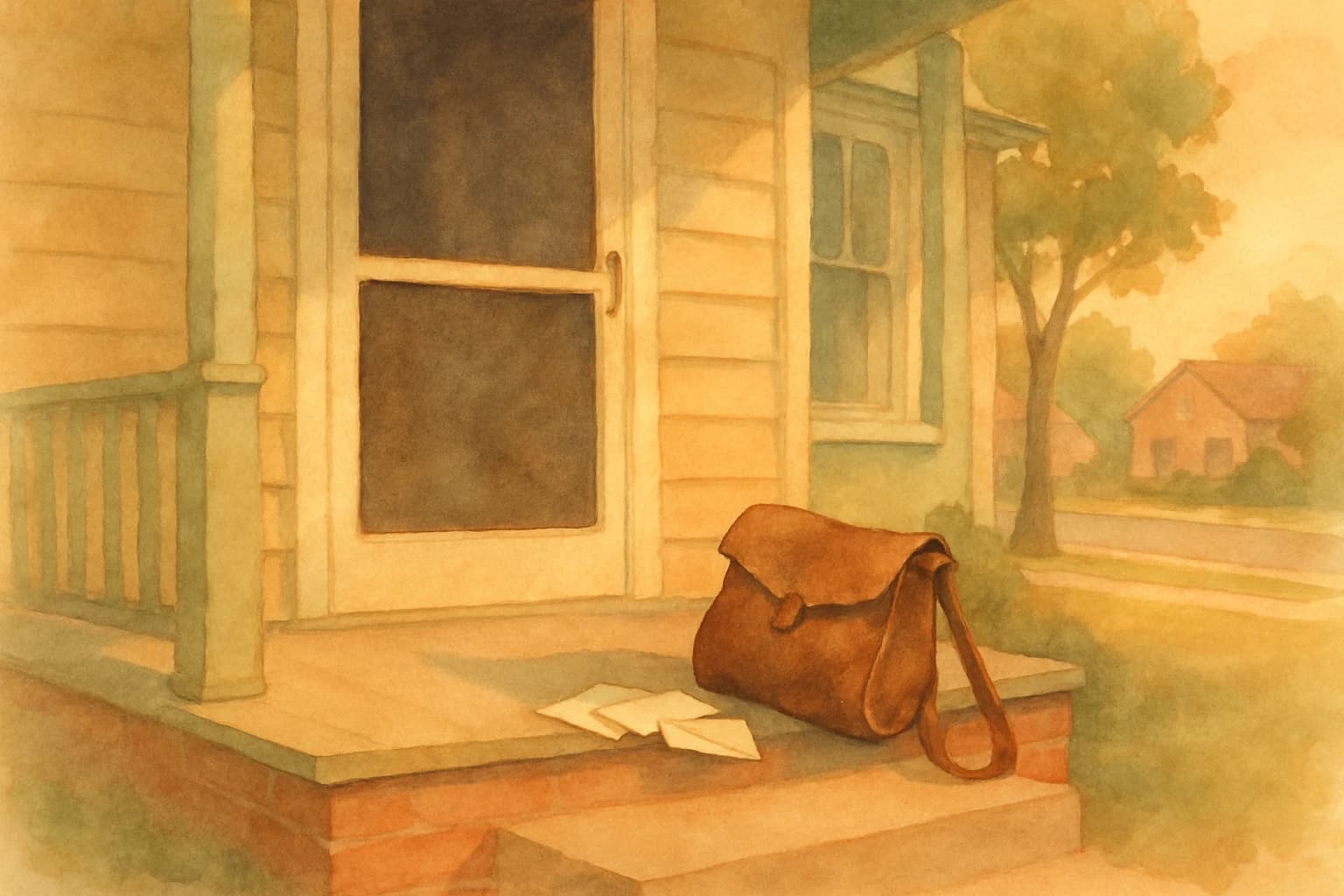
He came up the walk on foot every weekday around two in the afternoon, in his summer shorts or his winter jacket, with the leather bag over his shoulder slung the same way it had been slung since before you were born. He waved. You waved back. Some days you ran out to meet him because there was a card you were waiting for. Some days you didn't see him at all because you were inside doing something else. But he came, every day except Sunday, the same window, the same route, for the entire span of your childhood.
His name was Walter, or Gene, or Frank, or Mr. Henderson if your family was formal about that kind of thing. Your mother knew his wife's name. Your father knew that he liked the Cardinals. You knew he kept dog biscuits in his bag for the spaniel two doors down. The relationship was specific and ongoing and built on fifteen years of small daily contact, none of it remarkable, all of it cumulative.
This was the American mailman, and he was probably the most embedded municipal worker in American daily life that ever existed. He's mostly been replaced now, by route consolidation, by driving routes, by the slow contraction of personal mail itself. What disappeared with him is a kind of neighborhood infrastructure that nobody quite mourns out loud, partly because there isn't a clean word for what he was.
The relationship ran on reliability
He came six days a week in the same window. You could set a clock by him. If he was thirty minutes late, you noticed. If he didn't come at all, you wondered if he was sick or if there was something wrong with the truck downtown.
The depth of the contact didn't come from anything he said. It came from the sheer fact of his showing up, on schedule, day after day after day, for so long that he became part of the structure of the week. Most relationships in adult life depend on initiative -- somebody has to call, somebody has to plan. The mailman required nothing of you. He just kept appearing.
A great many older people now describe him, looking back, as the most reliable visitor of their childhood. That's not nothing.
He noticed things
He held mail back when you went on vacation, without being asked. He'd noticed the curtains drawn, the newspaper accumulating, the porch light left on too long. He saw the patterns of the street because the patterns of the street were his job.
When something was off, he registered it. Mailmen sometimes found bodies. They were often the first person to realize an elderly widow on the route hadn't picked up her mail in four days. They performed a daily wellness check on every house they served, not as part of their job description, but as a side effect of doing the job well over a long time.
He waved at the women on porches. He had brief conversations with the men out watering their lawns. He knew which dogs barked at him and which didn't, and he had named each of them privately. He delivered birth announcements and got-into-college letters and condolence cards, and over the years he learned the trajectories of the families he served the way a country doctor used to learn the families in his practice.
It wasn't intimate. It was structural. The relationship ran mostly in one direction; most households knew almost nothing about him personally, and that was fine. The structure was the point.
What ended it
The walking route gave way to the driving route in many neighborhoods, especially the newer suburbs built far enough from each other that walking didn't make sense. The driving route preserved the schedule but removed the contact. A driver who pulls up to a curbside box, drops mail in, and drives away is doing the same job, technically. He's not the same person to the people on the street, because they never see him.
Routes got consolidated. The same mailman who had served your block for fifteen years got reassigned to a longer route covering more houses. The continuity broke. Now the person delivering your mail might be different next week, and you wouldn't notice except that the new one doesn't know which porch has the dog.
Personal mail dwindled. Email replaced letters through the 1990s and 2000s. The birthday card from Aunt Helen became a Facebook post. The handwritten note from your sister became a text. The volume of meaningful mail dropped, and the relationship that had been built around delivering meaningful things to specific people lost some of its weight along with it.
The job got harder and was paid less in real terms. Turnover went up. The man who had been on your route for fifteen years retired, and the next person didn't stay long enough to learn it.
What was lost
The first thing was the predictability. There aren't many people left in modern life whose appearance you can count on every weekday. Even the Amazon driver, who you may see daily, doesn't have a name you know, and he won't be back next week if there's no package.
The second was the wellness check. Nobody quite replaces a daily walker who knows the rhythms of every house on a street. The Amazon driver isn't checking on your neighbors. The Uber Eats guy isn't either. The role isn't being filled by anything else, and the population it used to serve -- older people living alone -- is the population most affected by its absence.
The third was a small piece of civic dignity. The mailman was a federal employee with a uniform and a route and a reason to be on your sidewalk. He was an institution that touched your life every day, in a quiet way, and his presence connected your private household to the larger machinery of the country. The replacement -- boxes on the curb, packages tossed on the porch by a contractor -- does not carry the same weight, because nothing about it is built to last on the same human scale.
Some routes still have him
Some walking carriers are still out there. Some have been on the same route for twenty years and know everyone. Some neighborhoods still see the same person every day.
If you have one of these in your life -- if your mailman has a name you know -- you have something most American households no longer have. Tip him generously at Christmas. Wave when you see him. Ask him how his kids are. The relationship was always reciprocal, even when one side did most of the showing up. The least you can do is be visible from your own porch.
What was your mailman's name? Do you remember anything specific about him? Tell us in the comments -- we'd love to hear.
Get a new story every Sunday morning.
One email a week. No spam. Unsubscribe anytime.
If this brought back a memory, you might also like
The Small-Town Fourth of July We Lost
The parade started at ten in the morning and ran six blocks down Main Street. Most of the town was there. The rest of the town was in the parade.