What Happened to the Neighborhood Diner? A Love Letter to Vinyl Booths and Bottomless Coffee
The bell over the door announced you. The waitress called out be right with you, hon without looking up. The smell hit you next -- coffee that had been on the burner since five in the morning, bacon, griddle grease, a faint sweetness from the pie case spinning slow in the corner.
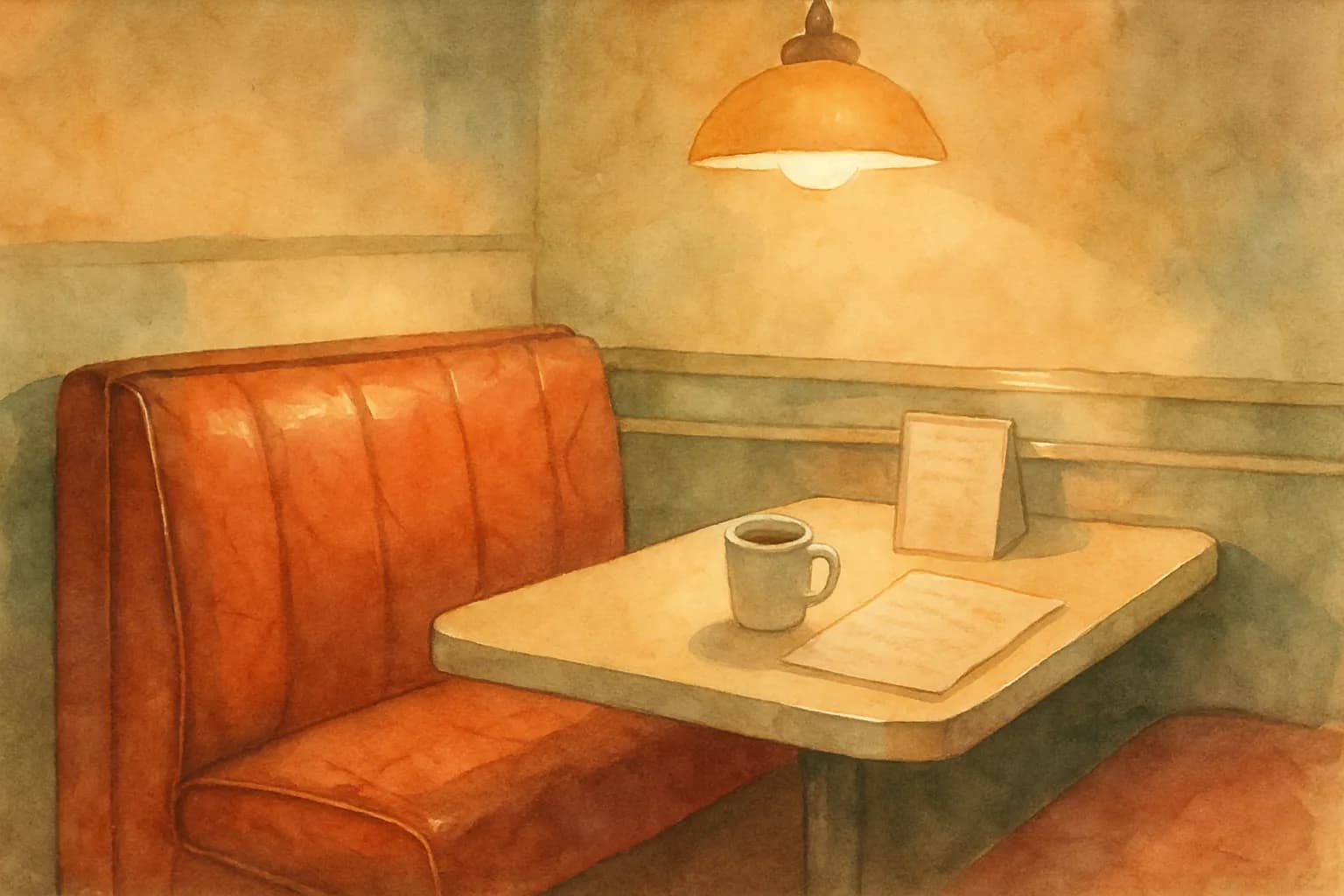
You slid into a booth. Red vinyl, cracked along the seam, repaired with duct tape that almost matched. The Formica tabletop was sticky in one spot and you knew which spot without looking. The menu was three pages long and laminated, and you didn't need it because you already knew what you were going to order.
That was the neighborhood diner. There used to be one within ten minutes of everywhere, and now there is barely one within an hour of anywhere.
The diner was more than a restaurant
A real diner was an institution. It opened at five in the morning to feed the men going to work, served breakfast to families after church on Sunday, fed teenagers after the football game, and stayed open late enough to feed the swing-shift nurses coming off duty at midnight. Three different towns walked through the same door in the same day.
The food was the excuse. What you actually bought, for the price of a $2.99 plate of eggs, was a seat at a counter where you belonged. You bought the right to nurse a coffee for an hour. You bought the company of a waitress who knew your name and your kids' names and remembered which one was struggling in school. You bought a booth where you could spread out the newspaper and have nowhere to be.
You bought, in other words, a third place -- somewhere that wasn't home and wasn't work, where the price of admission was the cost of a cup of coffee and the willingness to sit quietly among other people doing the same.
Who was at the counter
If you took a photograph of a diner counter on a weekday morning in 1975, you'd see most of the town in it.
There were the regulars at the end stools -- old men who'd been having the same breakfast at the same time for thirty years, whose orders went in before they sat down. There were the truckers, hat brim down, sleeves rolled up, eating fast because they had two hundred miles left to drive. There were the cops, drinking their coffee free, because every diner gave the cops their coffee free. There were the construction crews coming off the early shift in muddy boots, and the salesmen on their way to the next town, and the widowers who came in alone because eating breakfast at home had become unbearable.
Behind the counter, the waitress moved like a dancer. Pot of regular in her left hand, pot of decaf in her right, four orders on her tongue and three more in her head. She knew who was in a hurry and who wanted to talk, who paid in cash and who ran a tab, whose marriage was in trouble and whose kid had just shipped out. She knew because she'd been there twenty years, and because that's what the job was.
What replaced it
The first thing that came for the diner was the chain. Denny's, IHOP, Perkins, Bob Evans -- corporate breakfast moved into the highway exits and the strip malls in the 1970s and '80s, with consistent menus, consistent quality, and consistent mediocrity. They offered the same food a diner did, more or less, but cheaper to scale, with national advertising budgets the family-owned places couldn't match.
The second thing was fast food. McDonald's started serving breakfast in 1972 and changed everything. Why pay $5 for eggs and wait twenty minutes when you could grab an Egg McMuffin for a dollar in your car?
The third thing was real estate. The little corner lots where neighborhood diners sat were worth more as parking lots, drug stores, or chain coffee shops than they were as diners. The owner died, the kids didn't want to run it, the building got sold, and a CVS went up where the booths used to be.
The fourth thing was us. We stopped going. We started getting our coffee from a drive-through and our breakfast from the freezer. We got busy. We got self-conscious about sitting alone in public, in a way that previous generations never were. We stopped reading the paper at the counter because the paper was on our phones now, and we read it at home.
What was lost
When a diner closes, the building goes, but what really goes is harder to replace.
The regulars lose their morning. The waitress loses her job and the customers who'd become her family. The town loses its mixing chamber -- the one room where the doctor sat next to the mechanic, where the mayor knew the truckers by name, where the rich kid and the poor kid both ordered the same $4 breakfast and ate it at the same counter. That casual democracy is gone, and it isn't coming back from a chain restaurant or a coffee app.
The teenagers lose their first real public space -- the one place outside the school where they could sit for hours, drink terrible coffee, and figure out who they were going to be. The widowers lose somewhere to go in the morning that isn't an empty kitchen. The neighborhood loses one of the last places where everyone, regardless of who they were, simply showed up.
They're not all gone
In some towns, the old diner is still there. Same family, sometimes third or fourth generation. Same vinyl booths, same coffee that's been on the burner since five, same waitress who's been there forty years and is going to retire when she's good and ready.
If you have one of these still standing in your town, go this week. Go on a Tuesday morning when it's quiet. Sit at the counter. Order whatever the regulars order. Tip more than you need to. Talk to the waitress.
Don't take it for granted. The next time the lease comes up, the building might be a CVS.
If yours is still there, go this week. Sit at the counter. The coffee is terrible and the company is irreplaceable.
Get a new story every Sunday morning.
One email a week. No spam. Unsubscribe anytime.
If this brought back a memory, you might also like
The Lost Art of Writing a Thank-You Note (And Why It Still Works in 2026)
Your grandmother had a stationery drawer and wrote thank-you notes within three days of receiving anything. We hated it as kids. We were also being handed one of the most powerful small skills in adult life.