The Last Generation That Played Outside Until the Streetlights Came On
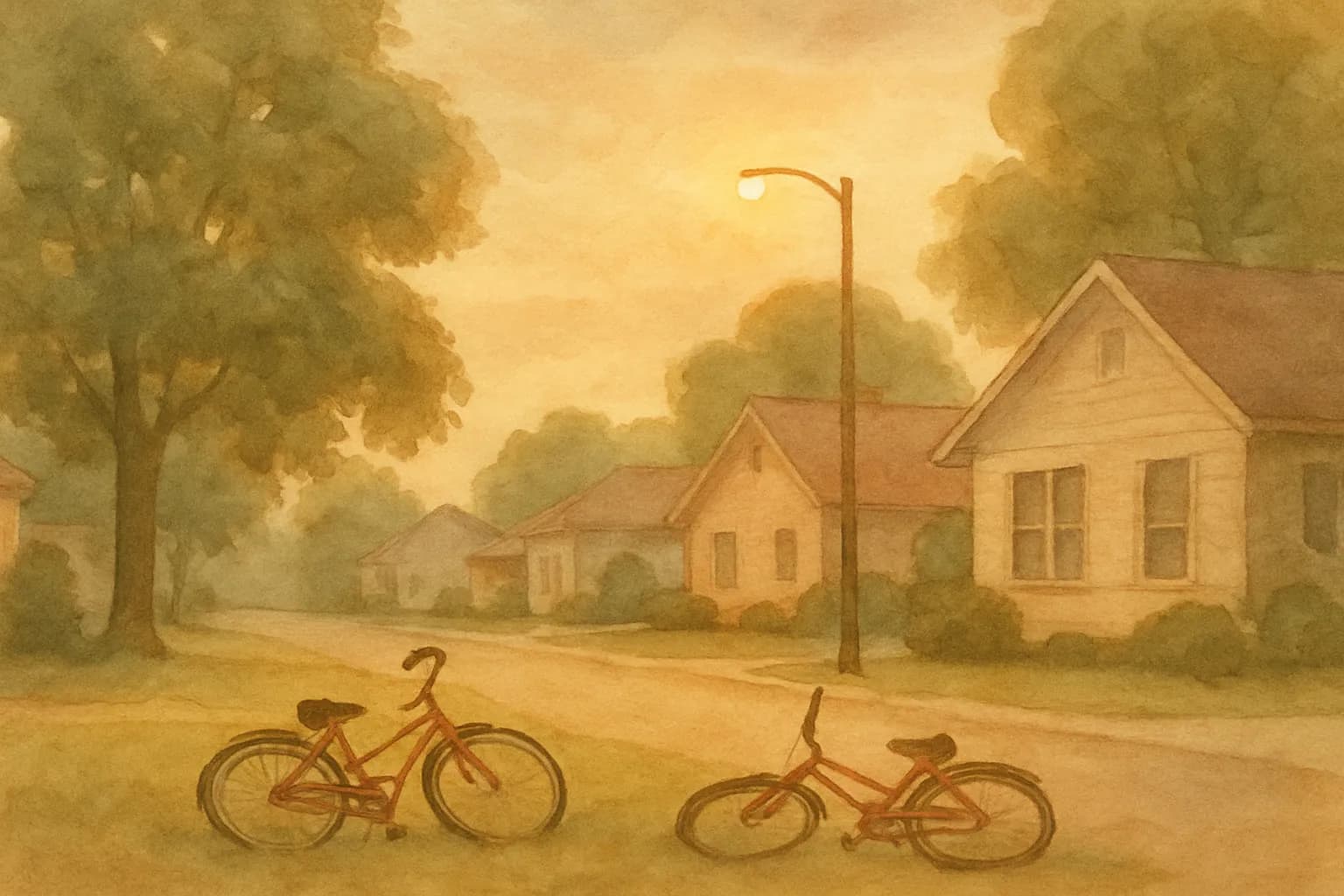
You knew it was time to go home when the streetlights flickered on.
Not when your mother called. Not when your watch said so -- you didn't have a watch. Not when the food was ready, because the food would be there whenever you got there. You came home when the streetlights came on, because that was the deal the whole neighborhood had agreed to, and every kid on every block knew it.
That deal is gone now. There may never be another generation like ours.
We left the house and didn't come back
Summer mornings, you ate breakfast and walked out the back door. Your mother had no idea where you were going, and you didn't either. You'd find out when you got to the corner and saw who else was around.
By ten, there were six of you. By noon, you'd built something -- a fort, a rope swing, a ramp out of stolen plywood and two cinder blocks from somebody's dad's garage. By three, you were on bikes, three miles from home, at a creek none of your parents could have located on a map. By five, you were eating peanut butter sandwiches at whichever kid's house was closest. By seven, you were playing capture the flag across four backyards in the gathering dark.
And then, sometime around eight-thirty in summer, the streetlights came on. A pause in the game. A wordless agreement. Bikes picked up, sneakers laced. Everyone scattered for their own porch.
Nobody had to enforce it. We just knew.
What we built out there
We didn't know it at the time, but those long unsupervised days were doing a job that nothing today quite replaces.
We learned to negotiate. With no adult around to settle disputes, we settled them ourselves, badly at first and then better. We figured out who could be trusted, who would cheat, who would back down in an argument and who wouldn't. We learned that some kids you played with and some kids you avoided, and the sorting happened without anyone explaining it.
We learned the geography of our own lives. Every kid had a mental map of the neighborhood that went a mile in every direction -- the shortcuts through yards, the loose board in the fence behind the Petersons', the storm drain you could crawl into if it was raining, the tree on the corner you could climb to see the whole street. We knew our places the way an animal knows its territory, because we'd walked every inch of it.
We learned what our bodies could do. You fell out of trees. You crashed bikes. You got the wind knocked out of you and lay in the grass for a minute, then got up. You came home with skinned knees and asked for a Band-Aid and went back out. The bumps taught you what was dangerous and what wasn't, and the lessons stuck because you'd earned them.
And we learned, most of all, how to be bored -- and what to do about it. With no screen to fill the silence, you had to invent something. A game, a story, a project, a destination. The boredom was the engine. It pushed you outside and into your own imagination, and the imagination grew because it had to.
Three things took it away
The first was fear. The 1980s brought a wave of stranger-danger panic -- milk cartons, news specials, the sense that the world had become a more menacing place. In reality, by every measurable statistic, the streets were getting safer. But the perception ran the other direction, and parents pulled their kids in. Once the doors closed, they mostly stayed closed.
The second was the calendar. The same decade that pulled kids inside also discovered that childhood could be optimized. Soccer leagues, dance classes, tutoring, music lessons, traveling teams. The unstructured hours that used to belong to children belonged now to coaches and instructors and the parents driving them everywhere. There was no longer any free time to spend outside, because there was no free time at all.
The third was screens. First cable television, then video games, then computers, then phones. Each one made indoors more interesting than outdoors, in increments small enough that no parent could quite say no. By the time we noticed what had happened, the streets were empty.
What was lost was specific
What we lost wasn't just exercise, or fresh air, or "play." Those things can be scheduled and they have been. Most kids today get more of all three than we did, on a per-hour basis.
What we lost was the unsupervised part. The hours when nobody knew exactly where you were or what you were doing. The hours when you had to figure something out on your own because there was no adult to ask. The hours when you and three other ten-year-olds had to decide whether the creek was too high to cross, whether the fight was worth having, whether the dare was worth the consequences.
That kind of time built something in you. A confidence that came from being trusted to handle yourself. A practical intelligence that came from making real decisions with real outcomes. A relationship to your own body and your own neighborhood that you don't get from a back seat or a screen.
It's hard to give a kid those things on purpose. They came, originally, almost as a side effect of parents being too busy or too overwhelmed to keep close track. We didn't appreciate them at the time. The kids today haven't ever had them, and don't know they're missing.
Honest about what shouldn't come back
Some of it should stay gone. The kids who didn't fit in were on their own out there, and the bullying could be vicious. The supervision was real, in the form of all those parents on porches keeping a casual eye -- but it wasn't perfect, and the children it failed, it failed badly. We should not romanticize a system that left some kids in real danger.
But the core of it -- the trust, the freedom, the long unhurried hours of being a child outdoors with other children -- that part deserves to come back, in whatever form modern life can manage.
Some neighborhoods are trying. There are "free-range parenting" movements, communities organizing supervised outdoor play, schools experimenting with longer recesses and looser rules. None of it is quite the same. But the impulse is right.
The streetlights still come on
They still flicker on every evening, in every neighborhood in America, at exactly the same hour they always did. The only thing that's changed is that there's nobody out there to see them.
If you grew up coming home when the streetlights came on, you were part of something that's already history. Tell your grandchildren what it was like. They won't quite believe you. But the story is worth telling, because someday, in some form, kids might get to live it again.
The streetlights still come on every evening, right on time. The only thing missing is us.
Get a new story every Sunday morning.
One email a week. No spam. Unsubscribe anytime.