Why Your Grandparents' Marriages Lasted: What We Stopped Doing
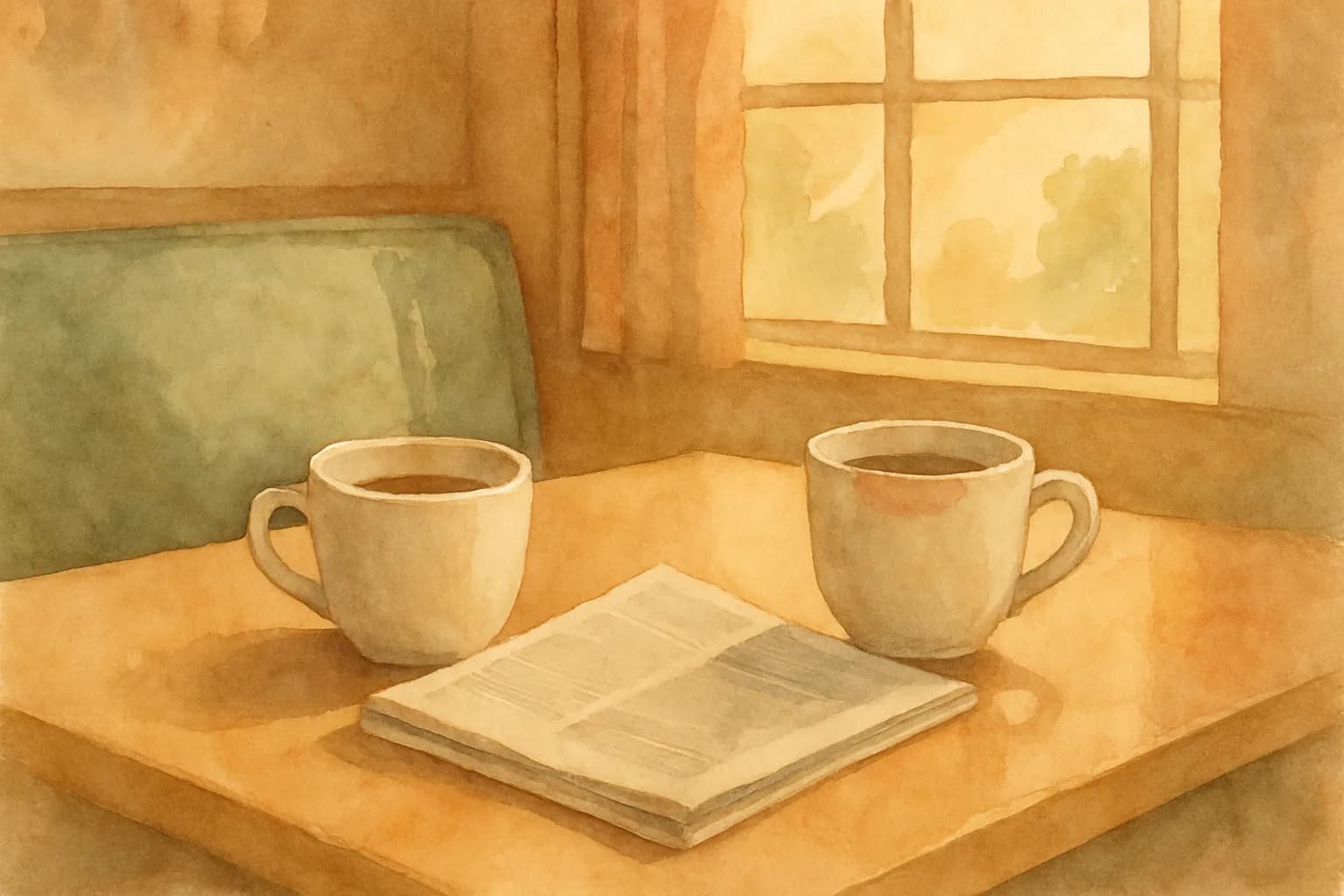
They are sitting in a corner booth at a small-town diner on a Tuesday morning. He has the eggs over easy. She has the oatmeal. They are not talking, exactly -- they are reading the paper and occasionally pointing things out. He pours her coffee without being asked. She pushes the cream toward him without looking up. They have been married for fifty-six years.
You see couples like this less often than you used to. There are reasons for that. And some of those reasons are good ones -- the kinds of marriages that should not have lasted are no longer forced to. But there are also things the long-married generation knew about staying together that we have, in the rush to fix the worst of their world, mostly forgotten.
Here is what they did -- the parts worth keeping.
An honest start
Before we go further, we have to be honest about the picture.
A lot of those long marriages were not actually happy. Women had fewer options to leave. Divorce was stigmatized in ways that trapped people in unions they would have walked away from today. Domestic abuse was hidden behind closed doors. The "stay together" ethic kept some couples together who never should have been, and the human cost of that -- to women especially, and to the children raised inside it -- was real.
Nothing here is an argument for going back to that. The freedom to leave a bad marriage is one of the genuine gains of the last fifty years.
But within the marriages that were good -- the ones that worked, the ones the grandchildren remember warmly -- there were practices the long-married couples shared, almost without realizing it. Those practices have mostly fallen away, and the marriages of the current generation are quietly poorer for the loss.
They expected hard years
The first thing they had that we mostly don't: low expectations of constant happiness.
A 1955 couple did not expect to be in love every day, or even every year. They expected that some years would be cold, some seasons would be lonely, some periods would feel like just getting through. They did not interpret a bad stretch as a sign that the marriage was broken. They interpreted it as a bad stretch.
This is not romantic. It is, however, deeply protective. A great deal of what gets diagnosed today as "the marriage isn't working" is actually a normal trough that previous generations would have ridden out. They knew the troughs were temporary. We have mostly forgotten that, and we end marriages because of seasons that would have passed if we'd waited.
They married for compatibility, not infatuation
Your grandparents likely met in their twenties, often through family, church, school, or work. The questions they asked, implicitly, were: Do we want the same things? Do our families approve of each other? Do we work well together? Is he steady? Is she kind?
They did not ask: Is this the most exciting person I will ever meet? Do I feel butterflies? They knew infatuation faded. They were not basing a fifty-year decision on a feeling that lasts eighteen months.
The result was a generation of marriages built on a foundation that could carry weight. They were not in love at the wedding the way the movies say you should be. They were, however, building something that would still be standing in forty years.
They had separate spheres, and respected them
He had his work. She had hers -- whether outside the home or inside it. They didn't try to be each other's everything. They had friends he didn't know well, friends she didn't know well, hobbies, clubs, projects. They came back together at dinner to talk about it all.
The modern expectation that your spouse will be your best friend, your therapist, your lover, your business partner, your travel companion, your workout buddy, and your primary social connection puts a kind of weight on a marriage that almost no marriage can carry. Your grandparents knew this without having to think about it. They distributed the weight.
A marriage with too much weight on it breaks. A marriage with separate spheres, where each partner has a life that doesn't depend on the other for oxygen, can carry decades.
They worked shoulder-to-shoulder on something
The strongest old marriages almost always had a shared project. The farm. The business. The house. The children. Raising tomatoes. Refinishing the basement. Putting the church potluck together every fall.
The work was not the marriage, but the work held the marriage. They were not constantly facing each other, examining the relationship. They were standing side by side, looking at something else they were both trying to build, and the marriage grew quietly out of the working.
Marriages that are entirely about the marriage have nowhere to rest. Marriages with a project -- even a small one -- have somewhere to put their hands.
They didn't share every feeling
This one is hardest to defend in a therapy-saturated culture, and it deserves the most careful handling. But it is real.
Your grandparents did not tell each other every passing emotion. They had a sense, maybe inherited, that some feelings should be sat with privately before being spoken aloud -- that a fleeting resentment, voiced in the moment, could become a permanent wound. They edited. They held things back. They let small things go.
This is not the same as emotional repression, and it is not an argument for stuffing real grievances. The serious things they did say. But the small, daily currents of irritation -- the way he chewed, the way she folded the towels -- they often let those pass without comment. And the marriage was lighter for it.
The current ethic of total emotional transparency between spouses is, in some ways, an experiment we are still running. The old way was: not everything needs to be said.
They didn't keep score
A long marriage that works does not keep a ledger. Who did the dishes last. Who got more sleep. Who made more money. Who's turn it is.
Your grandparents had decades to balance out. Some years he carried more. Some years she did. Some years one of them was sick, or grieving, or just having a hard run, and the other one quietly did the work. They trusted that it would even out, because they were going to be in this for the long enough that it could.
Score-keeping is the language of a short marriage. A long marriage runs on the assumption that the accounting happens over a lifetime, not a week.
They were embedded in something larger
The marriages that worked were almost never just two people. They were two people inside a church, a neighborhood, a family, a community -- a web of other people who knew them, watched them, supported them, and occasionally held them accountable.
When the marriage hit a hard year, there were people around to absorb some of the strain. A sister to listen. A pastor to talk to. A neighbor who'd been married forty years and could say this is normal, you'll come out the other side. The web caught couples that might otherwise have fallen.
Modern marriages often happen in a kind of isolation that your grandparents would not have recognized. Two people in a city far from family, working too much, with no church and no neighborhood and few close friends -- that's a hard environment for a marriage to survive in. Not because the people are worse, but because the surrounding web isn't there.
What this means for the rest of us
None of this is an argument that your grandparents' marriages were better than yours. Many of them were not. The ones that were happy worked for reasons that are worth understanding, and the ones that were unhappy stayed together for reasons that are worth grieving.
The practices that the good ones shared -- low expectations of constant happiness, compatibility over infatuation, separate spheres, a shared project, restraint in emotional expression, no scorekeeping, embeddedness in community -- those are available to anyone, in any marriage, today.
They aren't romantic. They aren't viral. They don't make a good movie.
But they make a fifty-six-year marriage, sitting in a corner booth on a Tuesday morning, passing the cream without looking up. Which, in the long run, is more romantic than anything the movies ever made.
He pours her coffee. She pushes the cream. Fifty-six years, and the small things are still the whole thing.
Get a new story every Sunday morning.
One email a week. No spam. Unsubscribe anytime.
If this brought back a memory, you might also like
The Lost Art of the Long-Distance Phone Call
The phone rang at six on Sunday evening. Everyone knew who it was. She called every Sunday at six, because the rates dropped after six on weekends.