Why Sunday Dinner Mattered More Than We Realized
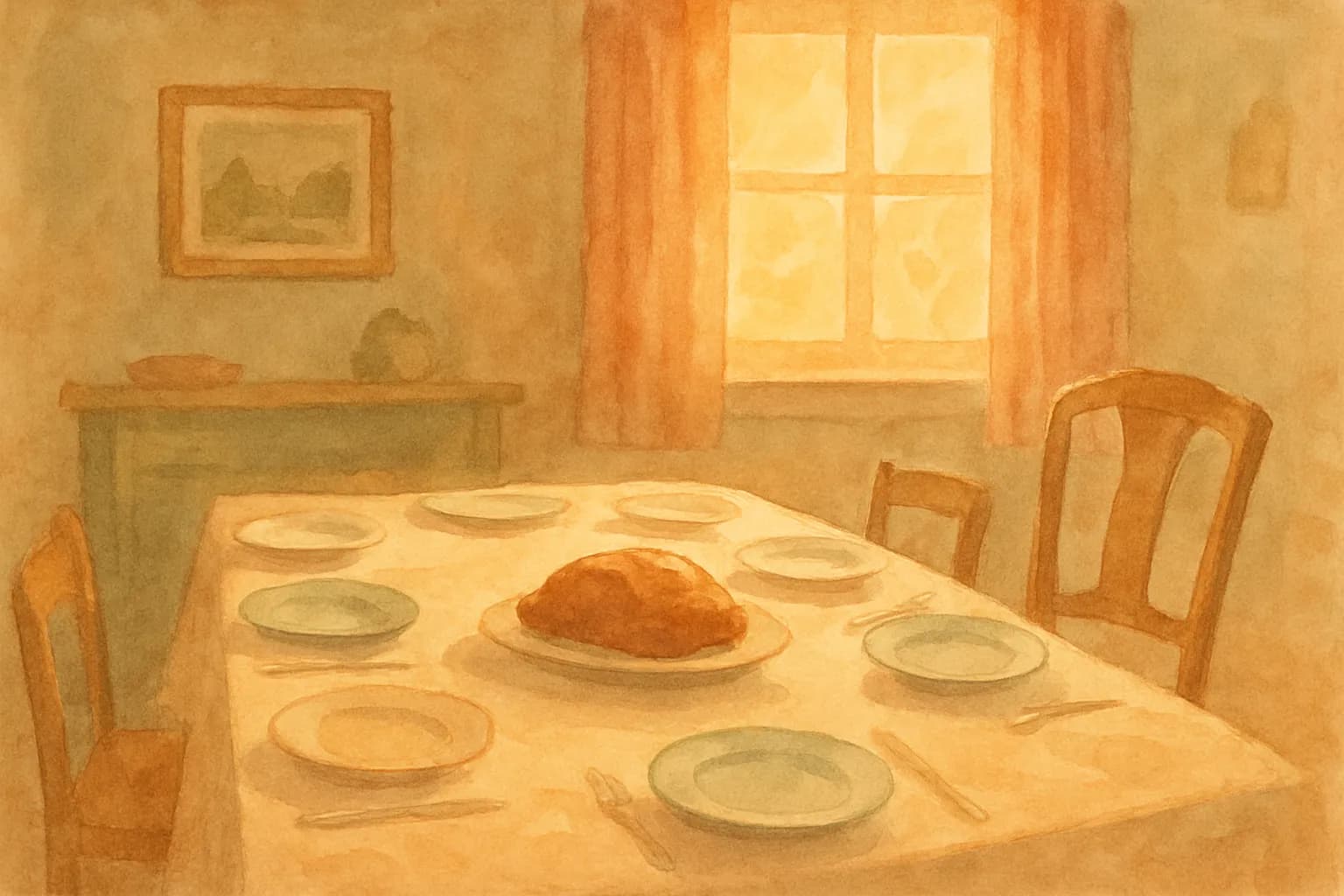
The roast went into the oven before church. By the time you came home in your good clothes, the whole house smelled like onions and beef fat and something baking in the next room over. The table -- the real dining room table, not the kitchen one -- had the extra leaf in it, and the good plates were out. Somebody was already setting them.
If you're old enough to remember Sunday dinner, you remember the smell first.
For most of the twentieth century, in most of America, Sunday dinner was the single fixed point of the week. Everyone knew where they were supposed to be at two o'clock on Sunday afternoon. The table was at Grandma's, or at the oldest aunt's, or at your own house if it was your turn. The food was big and slow -- pot roast, fried chicken, a ham, sometimes a turkey if there was something to celebrate. Mashed potatoes, gravy, three vegetables, rolls, a Jell-O salad with something suspended in it, two pies, coffee.
It took all morning to make and most of the afternoon to eat. That was the point.
It wasn't really about the food
The food was the excuse. What Sunday dinner actually was, looking back, was a weekly meeting of the family -- scheduled, recurring, attendance more or less required. Three generations in one room for three or four hours. Grandparents who didn't get out much. An uncle who lived alone. Cousins you'd grow up beside whether you liked them or not.
Nothing happened, exactly. Nobody planned an agenda. But over the course of a long afternoon, the same things happened every week without anyone noticing.
Stories got told. The ones about dead relatives, told so often the children knew them by heart before they were old enough to ask who Aunt Bess was. The ones about the old country, or the old farm, or the war. Family scandals were referenced obliquely over coffee -- you know, after what happened with your cousin Tommy -- and the older kids learned to read between the lines.
Recipes moved sideways across generations. Somebody asked how Grandma made the dumplings, and Grandma said it depended on the weather, and a daughter-in-law watched her hands and tried to remember.
Difficult conversations happened, too -- the kind that nobody would have scheduled, but that came up naturally over a second cup of coffee. A son announcing he was moving away. A daughter introducing a new boyfriend to the family for the first time. A grandparent quietly saying the doctor had found something.
There was always somebody to talk to, because there was always somebody there.
It anchored everyone, not just the kids
The grandchildren got the obvious benefit -- a multi-generational classroom in manners, family history, and how grown-ups actually behave when they're at ease. But Sunday dinner was doing quiet work for everyone at the table.
Grandparents had something to plan for, cook for, dress for. A reason to put on lipstick and tie a tie on the one day a week the kids would come. Widowed aunts had somewhere to belong. The unmarried uncle who lived above the garage was, for four hours a week, part of a household.
Parents, in the middle of the exhausting business of raising small children, had four other adults around to help. A child could be handed off, a tantrum could be defused by a grandfather, a baby could be passed around the table while the mother actually ate a hot meal.
And the marriage at the head of the table got something, too. A weekly audience. A weekly rhythm. A reason to stay close to home on Sundays because there was somewhere to be.
Three things took it apart
The first was Sunday youth sports. Travel soccer, club baseball, weekend tournaments -- by the 1990s, the family calendar had been quietly handed over to coaches and league administrators, and Sunday afternoons belonged to them. You couldn't be at Grandma's at two if the game was at three an hour away.
The second was distance. Children grew up, took jobs in other cities, and came home for holidays instead of Sundays. The weekly dinner became a yearly one, then an every-other-year one, then a phone call.
The third was the general acceleration of everything. Two-career households running on weekend errands. Kids with their own social calendars. Phones at the table. Streaming services that made staying home alone more entertaining than going somewhere together. The ritual didn't die so much as get crowded out by a thousand smaller things, each one reasonable on its own.
What we lost was the schedule
The food can be reproduced. Anyone can make a pot roast. What we lost was the fixed time on the calendar that the whole extended family had agreed, without ever discussing it, to honor.
When the ritual goes, the contact goes with it. The cousins don't grow up knowing each other. The grandparents see the grandchildren three times a year instead of fifty. The stories stop getting told because there's no occasion to tell them. The recipe dies with the grandmother because nobody ever stood next to her while she made it.
The connections still exist on paper. They just stop being practiced, and slowly stop being real.
You can bring it back, smaller
It doesn't have to be three generations and a roast. It can be your kids and your parents on the second Sunday of the month. It can be one set of in-laws at your kitchen table for spaghetti. It can be a recurring brunch with the cousins who live in town. The food doesn't matter, and neither does the room.
What matters is that it's on the calendar, that it's not optional, and that it happens whether or not anybody feels like it that week. The whole point of a ritual is that you keep doing it after the enthusiasm wears off.
Pick a day. Pick the people. Put it on every calendar in the family. The rest takes care of itself, the way it always did.
The table is still there. The leaf still fits. All it needs is a Sunday and the people to fill it.
Get a new story every Sunday morning.
One email a week. No spam. Unsubscribe anytime.